


Executive Assessment
Iran: The outward-facing track is advancing within a framework where“negotiation/messaging” and “military pressure/perception” are processed simultaneously; domestically, rhetorical intensity (social tension, judicial enforcement, and regime legitimacy debates) is pronounced. On the Iranian side, risk is growing not from a single event, but through a chain reaction: hardening rhetoric, security reflexes, narrowing diplomatic maneuvering space.
Iraq: The most “operational” file of the day is energy. Official export/revenue data and the refining capacity narrative indicate that Baghdad is simultaneously emphasizing cash flow continuity and internal supply security. Politically, government formation dynamics and intra–Coordination Framework balances are generating signals of “internal competition” along the Maliki–Sudani axis.
Syria: Field/civil order themes are more visible: in the northeast (post-SDF withdrawal road/access reopening, developments around al-Hol), security and humanitarian order are intertwined. At the same time, oil fields/employment–administrative transition themes reflect local governance capacity and a search for “normalization.”
Iran: Iran’s political reading is unfolding on two levels. The first layer centers on the state/media line, where “maximum pressure” and external threat rhetoric are being reframed for internal consolidation. In this context, U.S. military positioning and its linkage to a “deterrence/resilience” narrative in Iranian public discourse stand out.
The second layer appears in opposition/critical texts that raise sharper questions regarding regime legitimacy and state–society relations. This dual structure suggests that risk is expanding not through discrete incidents but through atmosphere: as political language hardens, the operational scope of security enforcement broadens.
On the security front, the Iranian file is producing signals less through classic field incidents and more through internal security–judiciary–social mobilization dynamics. References to protest memory, interactions with security forces, judicial proceedings, and their symbolic meaning (deterrence/messaging to the public) recur frequently. This opens two risk windows in the near term:
• The reactivation of social backlash through tightening internal security practices.
• The legitimization of “exceptional” governance reflexes domestically through external pressure narratives.
On the diplomatic track, the central theme is that negotiation/contact channels are being conducted simultaneously with a perception of military pressure. The Oman/Muscat context is framed as “indirect talks” unfolding alongside psychological signaling created by concurrent military positioning. This produces a dual outcome:
• For Iran, the “negotiating under pressure” narrative is packaged domestically as a message of deterrence and resilience.
• Externally, displays of power and perception management overshadow technical negotiation content, raising the cost of agreement even if the window itself does not fully close.
On energy, there is no single dominant operational dataset today. Instead, macro uncertainty and market sensitivity themes circulate. In international markets (commodities/gold, etc.), risk perception is shaped by broader issues such as U.S. trade policy. In the Iranian context, energy discussions intersect more indirectly with sanctions and external pressure. Accordingly, the Iran energy file today enters the report less as operational data and more as a geoeconomic atmosphere.
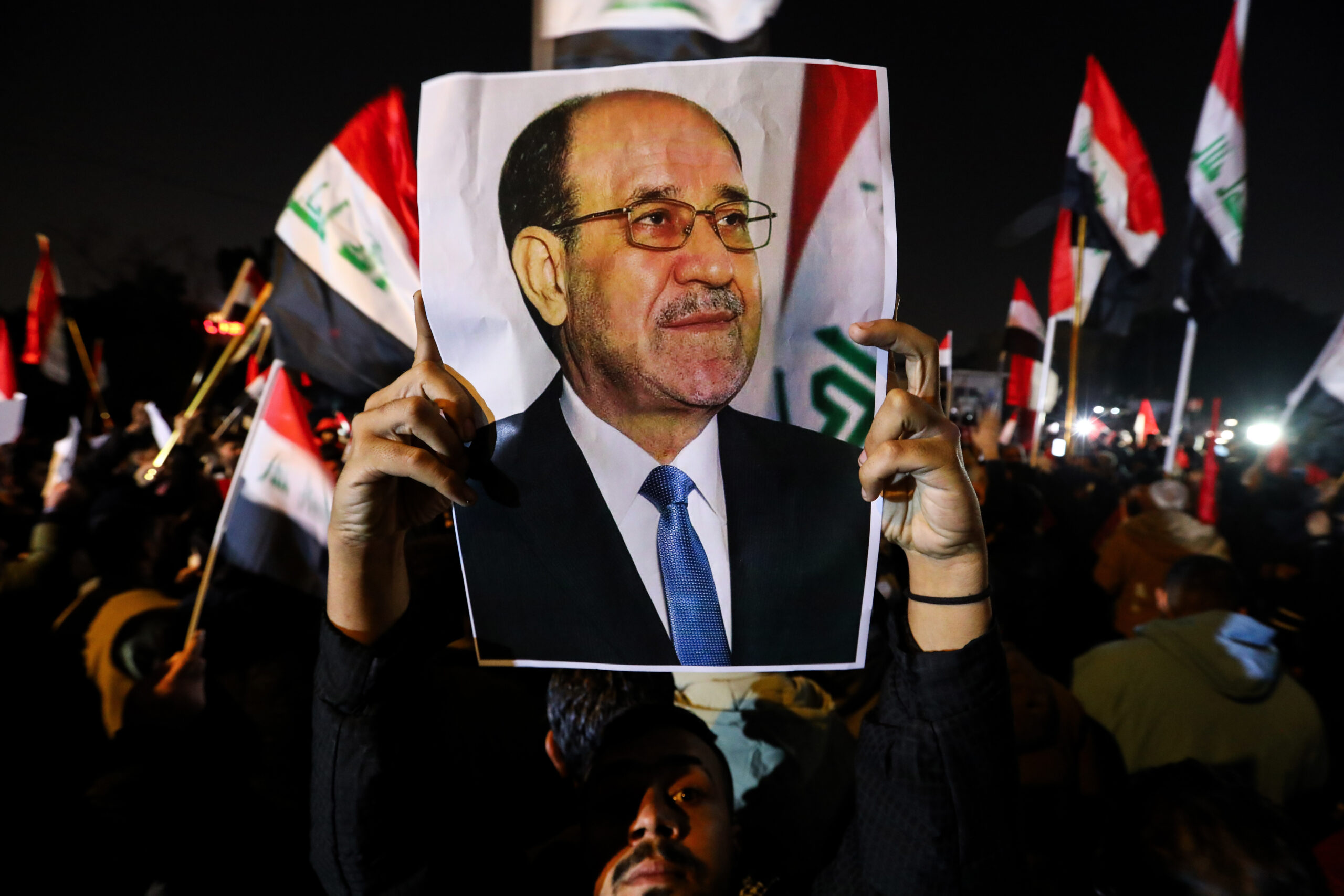
Iraq: In Iraqi politics, the key signal is the re-circulation of narratives from government formation periods and the persistence of competition within the Coordination Framework, keeping inter-actor trust/suspicion dynamics active. According to accounts attributed to Hanan al-Fatlawi, episodes such as Sudani’s withdrawal in favor of Maliki during government formation, discussions of a “third candidate,” and even references to “near-coup scenarios” reflect internal bloc fragmentation pressures. While such narratives do not undermine the stabilizing buffer provided by energy revenue continuity, they introduce fragility into decision-making processes.
On the security side, today’s Iraqi set is limited but strategically significant in background terms: protecting energy infrastructure and revenue flows remains a “red line,” even amid political rivalry. Rather than acute escalation, the tone is one of “stability messaging” and “manageable risk.” The key client takeaway: risk in Iraq today would grow less from sudden shocks and more from political friction eroding governance capacity.
Diplomatically, Iraq’s external relations appear primarily aligned with energy and economic positioning. Public messaging intersects with market stability, currency/financial management, and the sustainability of energy sales. The combined narrative of “supply continuity + revenue continuity” effectively functions as a diplomatic lever.
Operationally:
• January 2026 exports totaled 107.61 million barrels with $6.48 billion in revenue.
• December 2025 exports were 107.65 million barrels with $6.38 billion in revenue.
• Exports to India exceeded 996,000 bpd, while Chinese purchases declined to 949,000 bpd.
This reflects Baghdad’s effort to project stability in both volume and cash flow, while indicating continued volatility in buyer composition. Additionally, reporting aligned with the Iraq Oil Report line notes that refining capacity has surpassed 1.5 million bpd, representing an approximate 500,000 bpd increase since 2022. The return of the Baiji refinery is interpreted alongside rising domestic demand. This signals that Iraq is expanding capacity not only for export but also to strengthen internal supply security.
Syria: In Syria, political analysis is closely tied to field-level administrative and social order dynamics. Local governance capacity, service provision, and the interlinkage of security and humanitarian space are core indicators of efforts to reconstruct “state-like functioning.” Institutional coordination (education material delivery, water infrastructure rehabilitation, health programming) suggests normalization is being pursued through incremental, micro-level steps.
On security, two focal points emerge:
• Al-Hol area: The discovery of mass graves near the camp underscores that al-Hol is not merely a humanitarian issue but a persistent security file. Such findings keep the camp’sinternal/adjacent network violence capacity and oversight challenges at the forefront.
• Northern corridor mobility/access: In areas such as Tel Abyad–Ras al-Ain, road reopening and the direct impact on medicine/basic needs access illustrate how tightly security order and daily life are intertwined. The sequence “access opened and humanitarian relief” also implies that renewed access restrictions could rapidly reverse gains.
Diplomatically, Syria’s current track operates less through classical inter-state negotiations and more via international institutions and partnerships. Coordination with UNICEF, EU-supported health programs, and infrastructure initiatives form the external pillar of the “manageability” narrative. For clients, the implication is clear: diplomacy in Syria is presently technical in nature—centered on funding, program implementation, field access, and operational capacity.
On energy, the principal signal concerns northeastern oil fields and administrative transformation. Developments around the Jabsa oil fields, including recruitment and local employment measures, indicate that energy assets function not only as production nodes but also as instruments of administrative legitimacy and local economic stabilization. A secondary dimension of energy is infrastructure and services: water station rehabilitation, basic services, and indirectly electricity/logistics support embed “energy” within the continuity of everyday life.
Forward Look (Next 7 Days):
• Iran: Hardening of rhetoric along the Muscat/Oman track or intensified “military pressure” framing; potential parallel tightening of internal security practices.
• Iraq: New official data or commentary on energy revenue continuity at end-February/early-March; shifts in buyer composition (India/China). Additional statements along the Maliki–Sudani axis signaling intra-bloc tension.
• Syria: Further findings or operations around al-Hol; durability of northern road/access arrangements and their humanitarian implications; administrative/employment decisions around oil fields interacting with security balances.
Related Intelligence
Daily Brief
Get the daily intelligence summary delivered to your inbox every morning.