


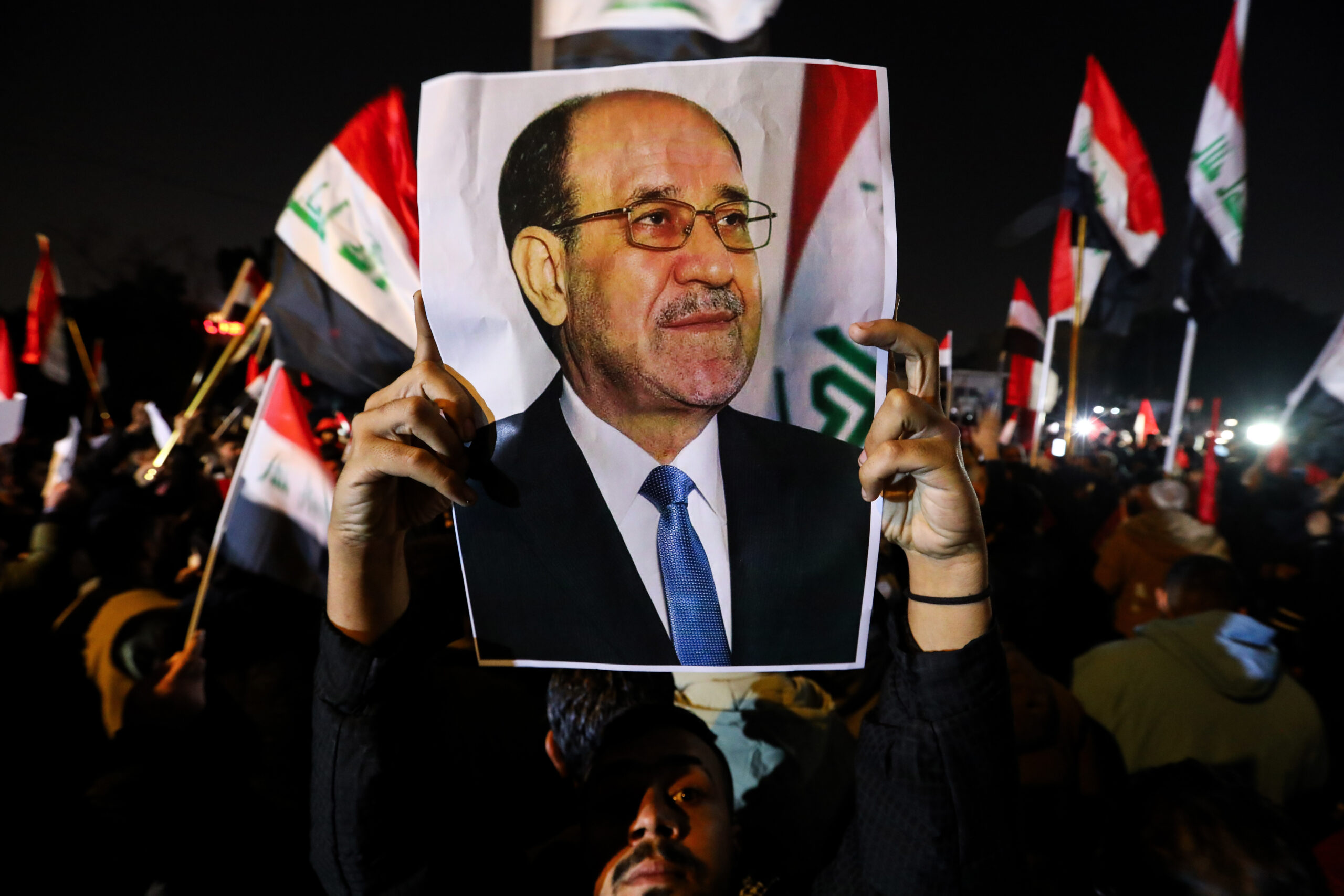
IRAQ PM RACE
Iraq’s government formation process remains deadlocked as the Shiite Coordination Framework (CF) continues to struggle to agree on a prime minister, despite a narrowing decision window and intensified bargaining in Baghdad. The core contest remains centered on whether incumbent Prime Minister Mohammed Shia al-Sudani can secure a second term or whether his rivals inside the CF can force a compromise candidate instead. Recent reporting indicates that al-Sudani has gained momentum, while Nouri al-Maliki’s path has weakened, though Maliki still retains the ability to block or delay consensus through internal bargaining and factional leverage.
Over the past 20 days, the process has increasingly taken the shape of a three-layer contest: first, a struggle inside the CF between pro-Sudani pragmatists, pro-Maliki hardliners, and factions searching for a third candidate; second, a parallel negotiation with Kurdish and Sunni actors, who retain kingmaker weight without yet consolidating behind a single option; and third, an external pressure track in which Washington and Tehran are both trying to shape the final outcome. Reuters reported on April 11 that Iraq’s parliament elected Nizar Amedi as president, a step that pushed the system closer to the premiership decision without resolving the underlying Shiite split.
Al-Sudani’s position has strengthened primarily because he is increasingly viewed as the least disruptive option for multiple sides at once. He remains acceptable to Washington, more manageable for several Iraqi factions than a renewed Maliki premiership, and sufficiently connected to the existing power structure to offer continuity without fully resetting the balance inside the Shiite camp. By contrast, Maliki remains deeply polarizing. Although still central to CF bargaining, recent Iraq-focused coverage has increasingly framed his candidacy as eroding rather than advancing, with reports suggesting that he has signaled conditional willingness to step back if that also prevents al-Sudani from securing a second term.
External involvement remains a decisive variable. The United States, through earlier messages associated with Thomas Barrack’s Iraq engagement, has made clear its opposition to a Maliki-led government and its resistance to any arrangement seen as expanding overt Iranian influence in Baghdad. Iran, meanwhile, has continued to work through mediation channels aimed at preserving CF cohesion and preventing an outright internal fracture. Recent coverage around Esmail Qaani’s Baghdad engagement has reinforced the view that Tehran’s priority is no longer simply installing a preferred name, but ensuring that the Shiite house does not split in a way that weakens Iran-aligned influence across the Iraqi system.
The immediate outlook remains fluid but narrow. The most plausible scenarios are a second term for al-Sudani, a late pivot to a compromise figure, or continued deadlock that prolongs caretaker governance and deepens systemic drift. The longer the impasse lasts, the greater the risk that the premiership file will stop being a contained elite bargain and begin feeding broader instability through institutional paralysis, security slippage, and intensified proxy competition. In that sense, the prime ministerial race is no longer just a government formation issue; it has become a test of whether Iraq’s post-election political order can still produce a controlled outcome under simultaneous domestic fragmentation and external pressure.
- Reuters, April 11, 2026 — Iraqi parliament elects Nizar Amedi as president.
- Shafaq News, April 19–20, 2026 — al-Sudani camp challenges Maliki nomination; Reconstruction and Development Coalition pushes second term.
- Iraqi News, April 20, 2026 — Coordination Framework deadline and final PM nominee meeting track.
- Jerusalem Post / regional reporting, April 20, 2026 — Esmail Qaani in Baghdad amid prime minister negotiations.
Related Intelligence
Daily Brief
Get the daily intelligence summary delivered to your inbox every morning.