


Iran War Daily Brief - 17 April 2026
Executive Summary
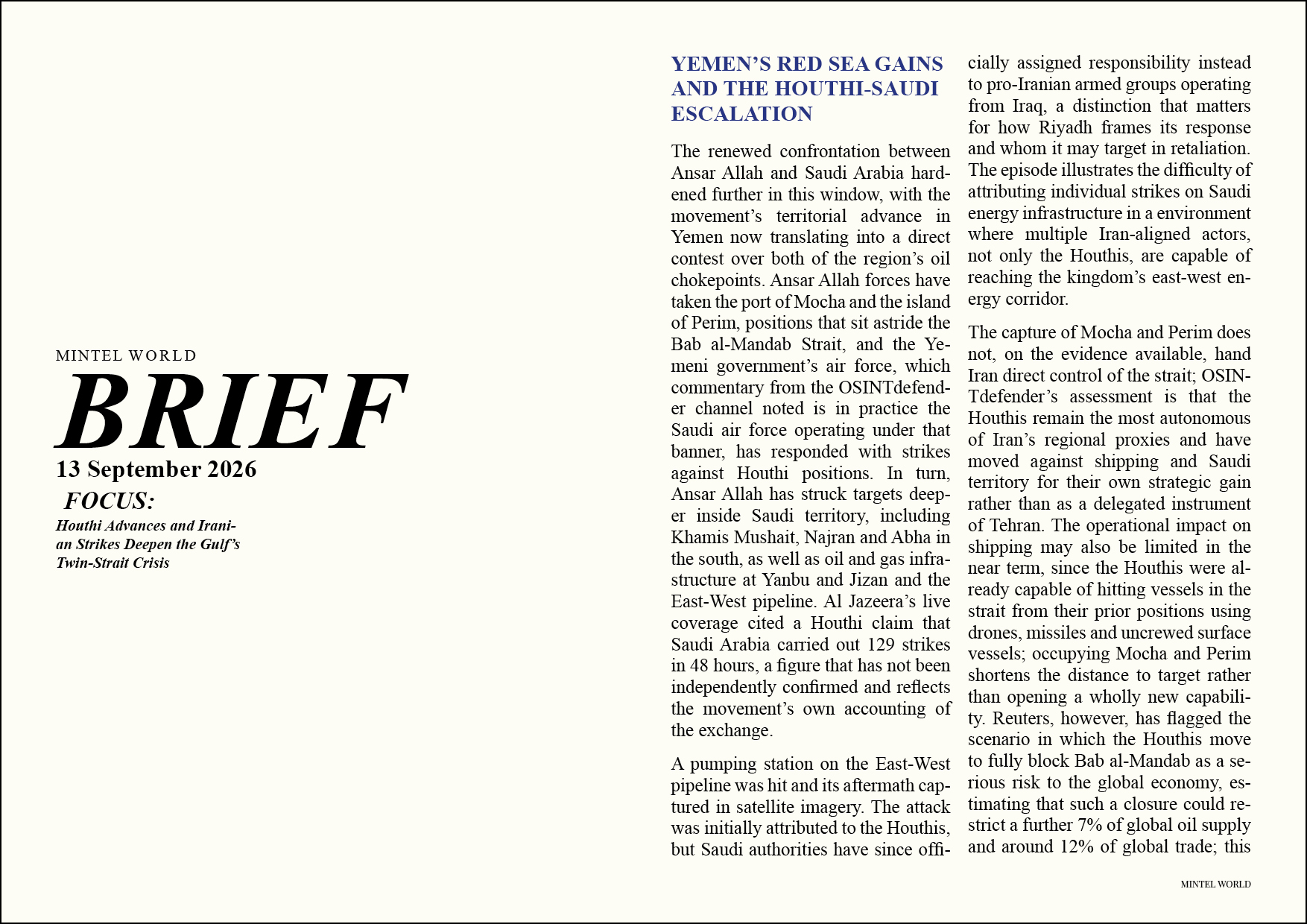
The regional system has shifted from a pure coercive-closure phase into a far more ambiguous hybrid phase in which political de-escalation has accelerated faster than operational normalization. The 10-day Israel-Lebanon ceasefire has removed the single most important secondary obstacle that had been poisoning the U.S.-Iran track, and Iran has now declared the Strait of Hormuz “completely open” for the duration of that Lebanon ceasefire. Markets immediately treated that as the first credible signal that the crisis might be moving away from systemic maritime paralysis: oil fell sharply, equities rose, and expectations for broader U.S.-Iran talks improved. Yet the same reporting cycle also confirms that the U.S. naval blockade on Iranian-linked shipping remains fully in force, that Washington still intends to widen pressure on Iran-linked vessels globally, and that neither the Lebanon front nor the nuclear file has been durably settled. The result is not normalization. It is selective reopening under continued coercion. This contradiction is now the central fact clients should plan around. On one side, Washington is presenting progress: Trump is publicly signaling that a deal with Tehran could come soon, Pakistan remains active as intermediary, and the Lebanon ceasefire is being framed as a gateway to wider regional de-escalation. On the other side, the U.S. still treats economic pressure as its principal leverage tool, with blockade language unchanged, contraband rules widened, and Iran-facing sanctions pressure still escalating. The immediate system effect is therefore a split-screen environment in which the political mood has improved and the regional market tone has lightened, while the coercive architecture that produced the disruption remains in place. The user-provided Trump posts intensify that contradiction rather than resolve it. In one, Trump says Iran, “with the help of the U.S.A.,” has removed or is removing all sea mines. In another, he says Hormuz is completely open and ready for business, but the naval blockade against Iran will remain until the broader transaction is complete. In a third, he claims the U.S. will get all “nuclear dust” created by the B-2 strikes, insists that this is separate from Lebanon, and says Washington will work on a separate Lebanon track while prohibiting renewed Israeli bombing there. Taken together, those statements matter because they imply a three-part U.S. framework: maritime reopening for the wider market, continued economic strangulation of Iran until a full deal is signed, and a deliberate effort to firewall the Lebanon track from the core uranium and enforcement bargain. The daily must therefore treat current calm not as peace, but as managed sequencing.
Related Intelligence

Daily Brief
Get the daily intelligence summary delivered to your inbox every morning.