


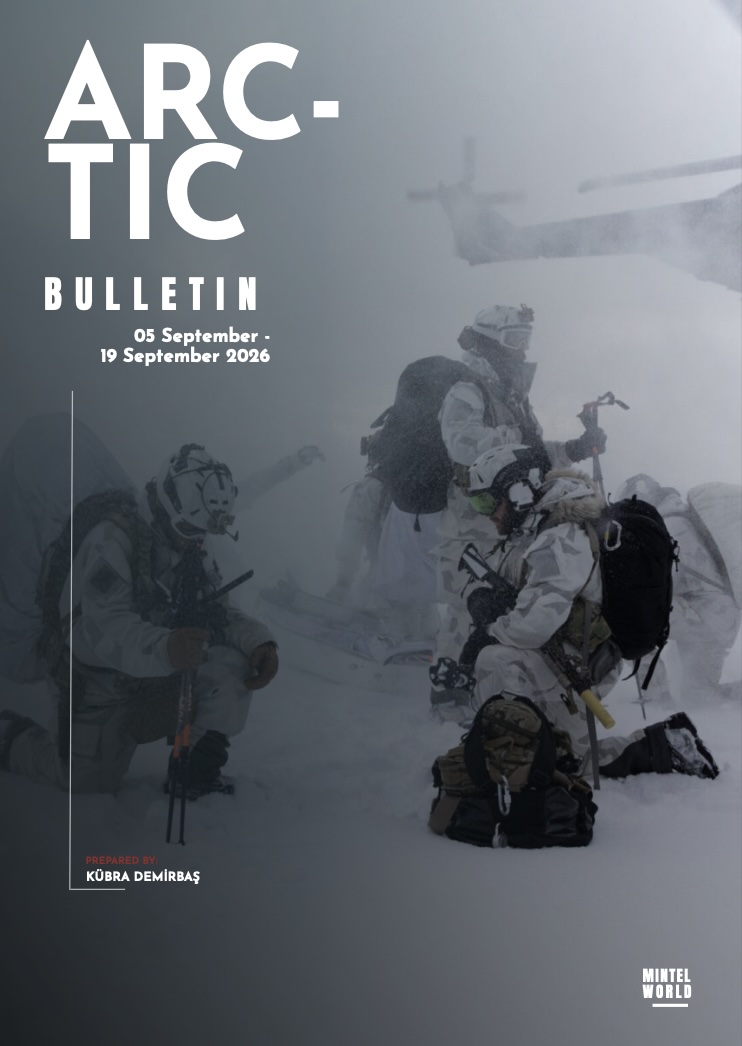
ARCTIC BULLETIN — Out Now- 05-19 September 2026
Executive Summary
The Arctic’s strategic landscape is increasingly shaped by the interaction of diplomatic alignment, energy security, military mobility and infrastructure control. During the reporting period, the European Union’s €200 million partnership package for Greenland and emerging security talks among the United States, Denmark and Greenland reinforced the island’s central role in Western strategy. NATO exercises and expanded air operations from Kangerlussuaq and Pituffik strengthened deterrence, while reported Russian activity near Svalbard’s subsea cables exposed persistent grey-zone vulnerabilities. Russia also advanced its Northern Sea Route ambitions through the first Vostok Oil loading and renewed equipment deliveries to Arctic LNG 2, although sanctions, limited shipping capacity and dependence on Chinese support continued to constrain expansion. Rising European purchases of Yamal LNG further revealed the tension between Western security policy and energy dependence. At the same time, Canada’s closer engagement with Europe and growing Nordic defence cooperation linked Arctic infrastructure more directly to transatlantic strategy. The regional balance is therefore being determined by control over ports, cables, airfields, energy corridors and investment flows rather than by military presence alone.
Related Intelligence
Daily Brief
Get the daily intelligence summary delivered to your inbox every morning.