


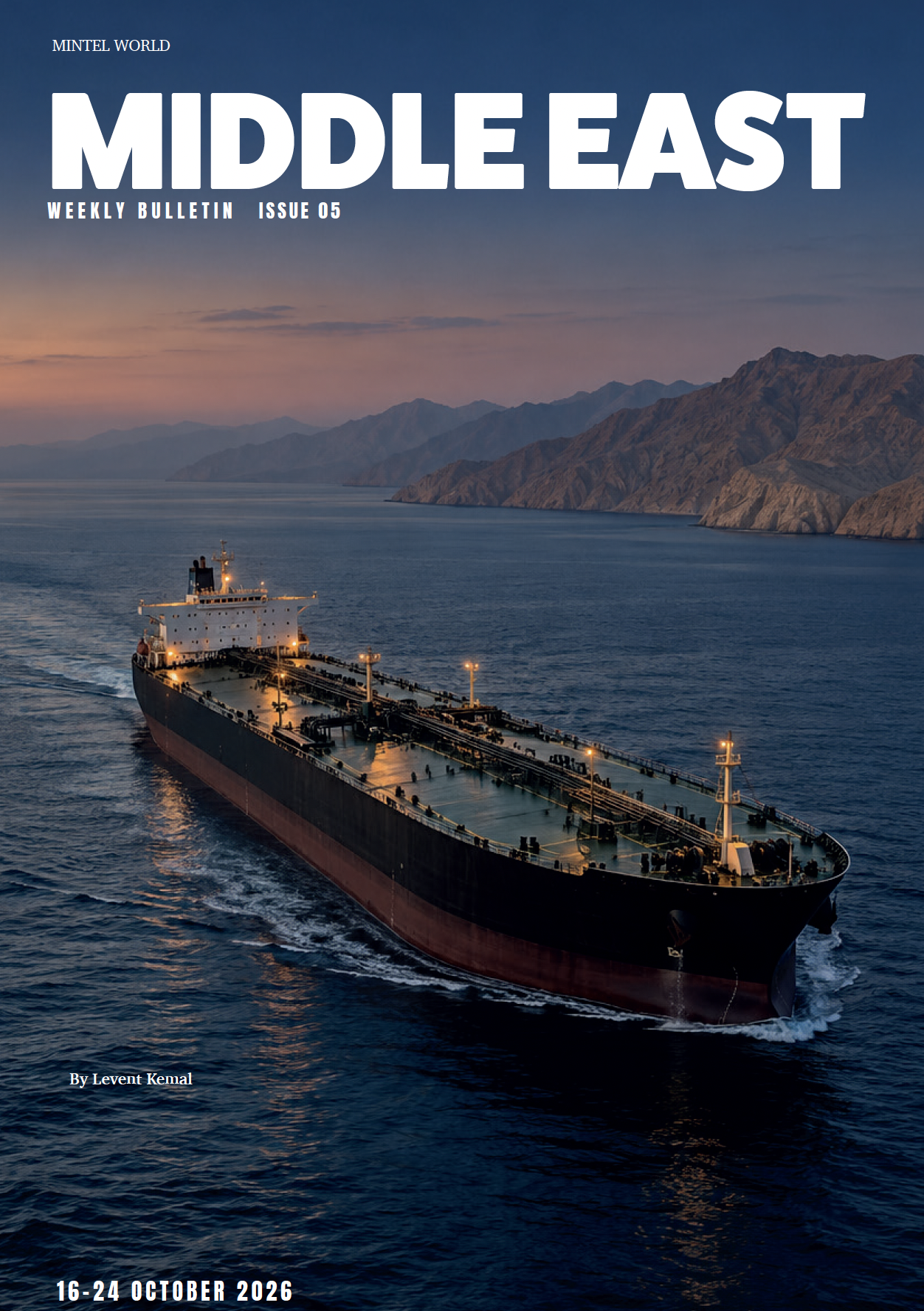
Middle East Bulletin Issue 05
Executive Summary
The threat of renewed US–Israeli military action against Iran dominated the reporting period. President Donald Trump’s 24 October remarks sharpened the possibility of imminent escalation, although neither a new campaign nor a diplomatic agreement was confirmed by the cutoff. Attacks on Saudi aviation and energy infrastructure reinforced the vulnerability of civilian facilities, while European and regional governments expanded diplomatic coordination. Continued mediation through Qatar, Oman and Pakistan preserved channels for negotiation without resolving disagreements over nuclear verification, sanctions, the US blockade and navigation through the Strait of Hormuz. Civilian conditions deteriorated across several conflict settings. In Taiz, blocked supply routes and fuel shortages undermined water production, hospital operations and maternal healthcare, while displacement stretched humanitarian capacity. Gaza faced reduced food assistance, continuing violence and damaged infrastructure ahead of winter. West Bank harvest attacks and new movement restrictions threatened livelihoods, while Jordan’s church attack, Lebanon’s disputed weapons enforcement and insecurity in southern Syria added distinct pressures. The separately dated ACLED extract recorded 130 selected political violence events and 186 reported fatalities during 16–22 October, with Yemen accounting for the largest share; those figures do not cover the bulletin’s final two days. Energy exports proved more resilient than the security environment, but rising oil and LNG prices, freight costs and maritime risks transmitted disruption beyond the region. Iraq pursued export, refining and transport capacity; Egypt advanced gas appraisal and prospective phosphate investment; and Syria developed financing, payment and logistics channels alongside persistent diesel shortages. These initiatives offer longer-term opportunities, but their immediate contribution remains uneven. The principal tests are whether diplomacy can contain escalation, whether essential supplies reach civilians consistently, and whether investment commitments become reliable operating capacity.
Related Intelligence
Daily Brief
Get the daily intelligence summary delivered to your inbox every morning.