


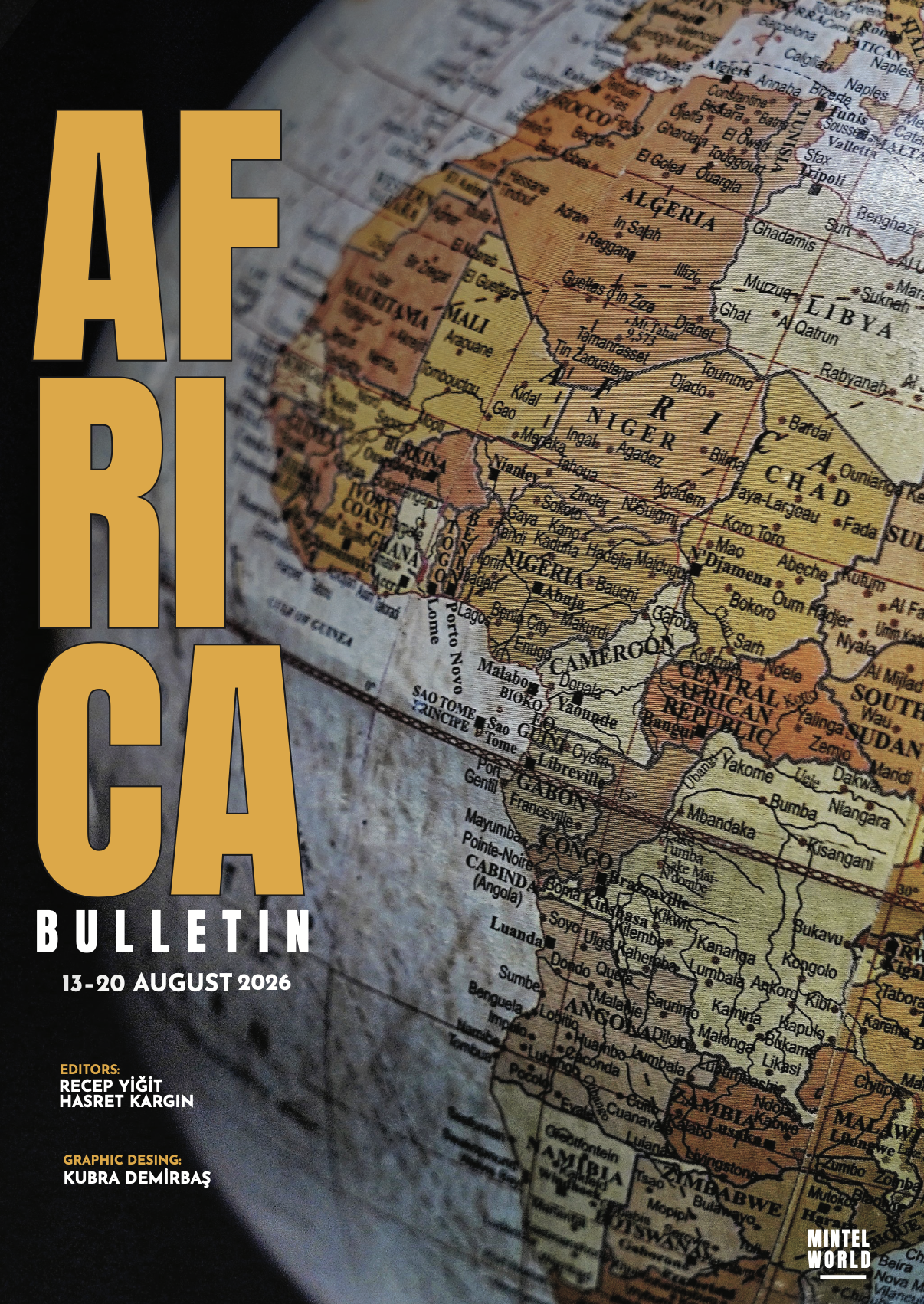
AFRICA BULLETIN — Out Now
Executive Summary
This week exposed a widening gap between diplomatic process and battlefield reality across Africa's conflict zones. In Sudan, the RSF's simultaneous offensives in North Kordofan and Blue Nile pushed El Obeid toward a full siege and brought Kurmuk and Geissan under TASIS control. The same pattern held in the Democratic Republic of the Congo: even as the Washington Agreement's monitoring mechanism advanced at the negotiating table, the FARDC-AFC/M23 front reignited in Kalehe, Fizi and Masisi. Mali illustrated the war's parallel economy — the junta recovered 82 soldiers from JNIM-FLA and pardoned French national Yann Vézilier, even as a UN report showed JNIM had financed an "unprecedented" wave of attacks with a $50 million ransom payment. In Nigeria, the week's violence cut both ways: the massacre in Bin-Per village, Plateau State, killed more than 20 people, while a rare success saw 308 people rescued after six months in captivity near Lake Kainji. On the energy and mining front, the week showed how instability is reshaping resource flows across the continent. A sixth drone attack on Zawiya pushed Libya's oil sector to the brink of force majeure, while Niger pressed ahead with its own energy ambitions, beginning drilling in the Kafra oil block with Algeria and signing a $1.9 billion Dosso refinery deal with the controversial Zimar Group. In mining, the DRC's copper-cobalt export ban sent cobalt prices soaring fourfold, and the collapse of the Zamboye gold mine in the Central African Republic became the year's deadliest mining disaster, killing more than 100 people. In Zambia, Hakainde Hichilema's re-election secured continuity in copper policy, but the post-election killing of a former minister exposed the political tension beneath that continuity.
Related Intelligence
Daily Brief
Get the daily intelligence summary delivered to your inbox every morning.