


Middle East Bulletin
Executive Summary
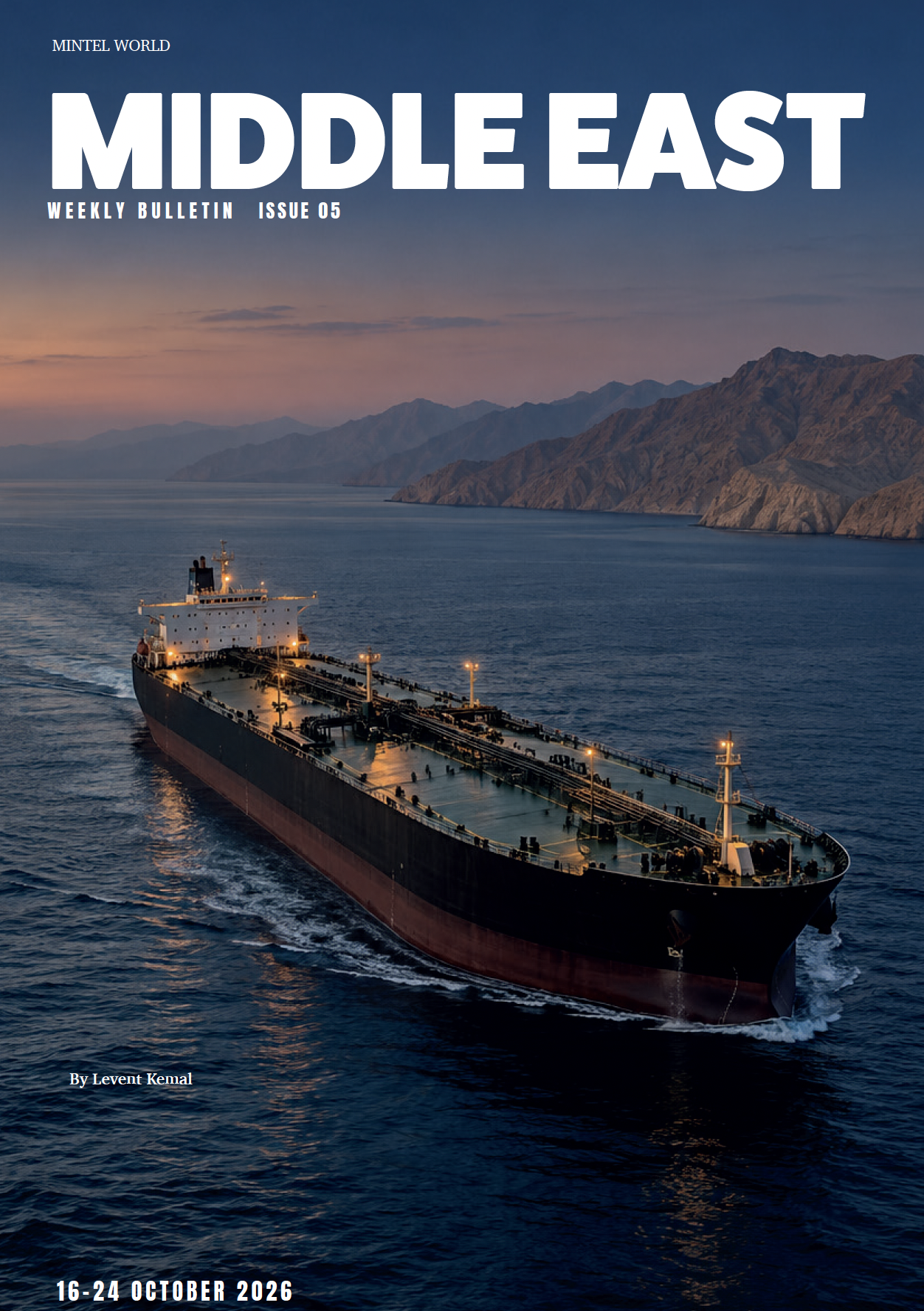
The Middle East entered a more dangerous phase during 6–13 September as two maritime chokepoints—Bab al-Mandeb and the Strait of Hormuz—became simultaneous centers of military escalation, energy disruption, and diplomatic activity. Yemen emerged as the most significant battlefield development of the week, with Ansar Allah (the Houthis) capturing Mokha, advancing through Dhubab, and ultimately taking Perim (Mayyun) Island at the narrowest point of Bab al-Mandeb, giving the group unprecedented leverage over Red Sea shipping. The United Nations warned that Yemen had entered a “new and more dangerous phase” of conflict, while reports suggested structural weaknesses within anti-Houthi forces, including allegations that large portions of Presidential Leadership Council troop numbers consisted of “ghost soldiers.” At the same time, the Hormuz crisis intensified. Naval exchanges between Iran and the United States continued, commercial shipping through the strait fell sharply, and attacks on merchant vessels persisted. An attack on an Iranian commercial ship near Qeshm Island on 13 September left one crew member dead and three injured. While Oman advanced efforts to broker a maritime arrangement involving Iran and Gulf states, Tehran maintained that Hormuz would remain effectively restricted until its conditions were met. The energy market reflected these risks. Brent crude rose from $96.28 per barrel on 4 September to an intraday high of $109.97 on 11 September before settling near $105. The surge was driven by simultaneous disruptions in Hormuz and the Red Sea, Houthi attacks on Saudi energy infrastructure, and the shutdown of the East-West (Petroline) pipeline following a drone strike traced to Iraq. Freight costs and war-risk premiums also continued to rise sharply, increasing pressure across global energy supply chains. Diplomatically, the BRICS Summit in New Delhi became a focal point for regional engagement. Iran used the gathering to intensify outreach to Oman, Gulf states, Russia, China, Egypt, South Africa, and the UAE. Discussions centered on maritime security, regional stability, and possible de-escalation mechanisms. China signaled interest in a larger Middle East mediation role, while Russia and Iran continued visible coordination amid the ongoing Gulf crisis. Conflict data continued to show Palestine, Lebanon, Iran, and Iraq as the most active theaters tracked within the regional dataset. Palestine recorded 674 events and 72 fatalities, Lebanon 635 events, Iran 314 events, and Iraq 193 events during the reporting window. The data indicates that while Yemen dominated strategic attention, instability remained widespread across multiple fronts throughout the region. Overall, the week was defined by the convergence of military escalation, maritime insecurity, and energy-market disruption. Control of key waterways—notably Bab al-Mandeb and Hormuz—has become the central strategic variable shaping regional security, global shipping, and commodity markets, while diplomatic initiatives have so far struggled to keep pace with developments on the ground.
Related Intelligence
Daily Brief
Get the daily intelligence summary delivered to your inbox every morning.