


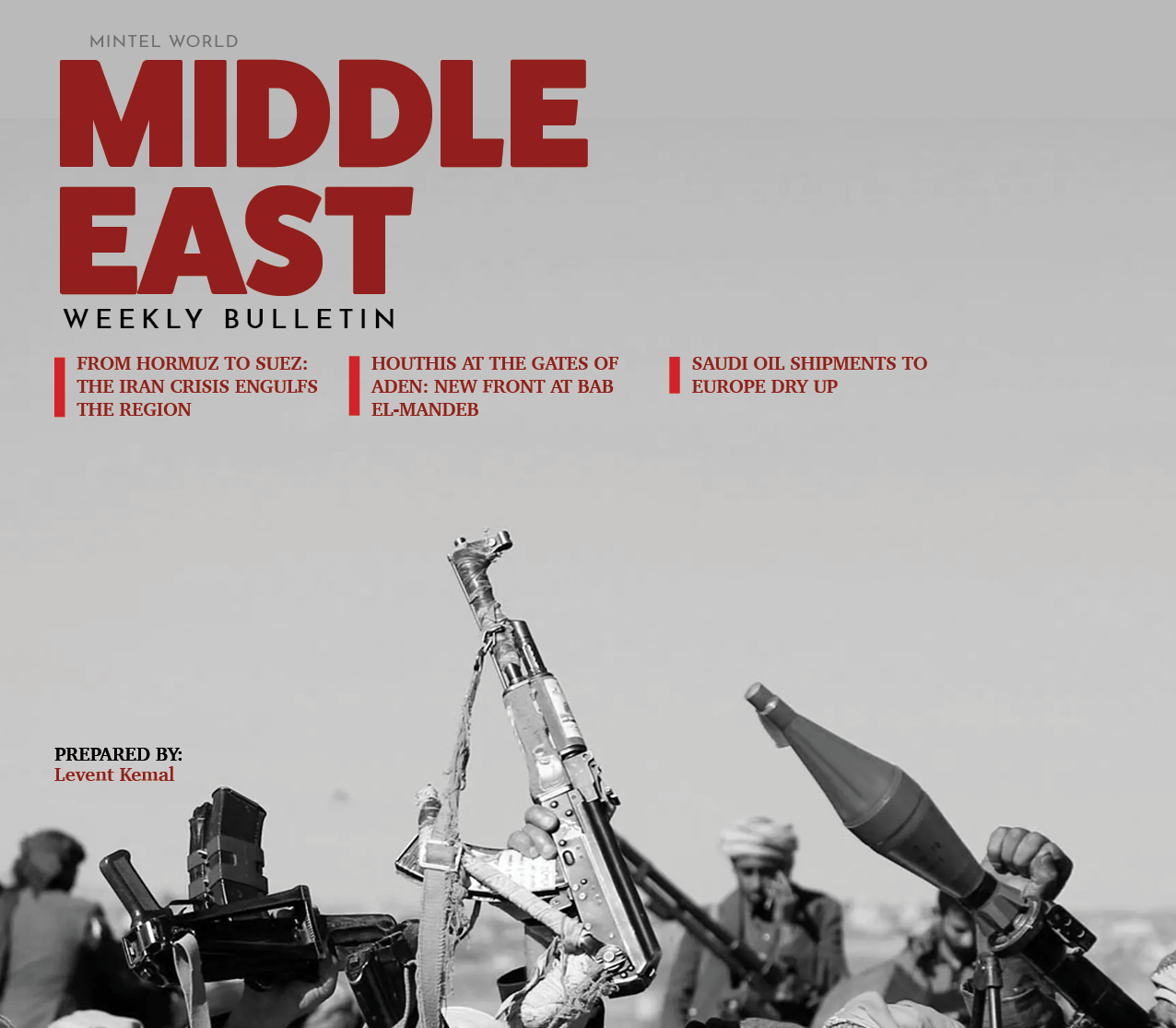
Middle East Bulletin No:2
Executive Summary
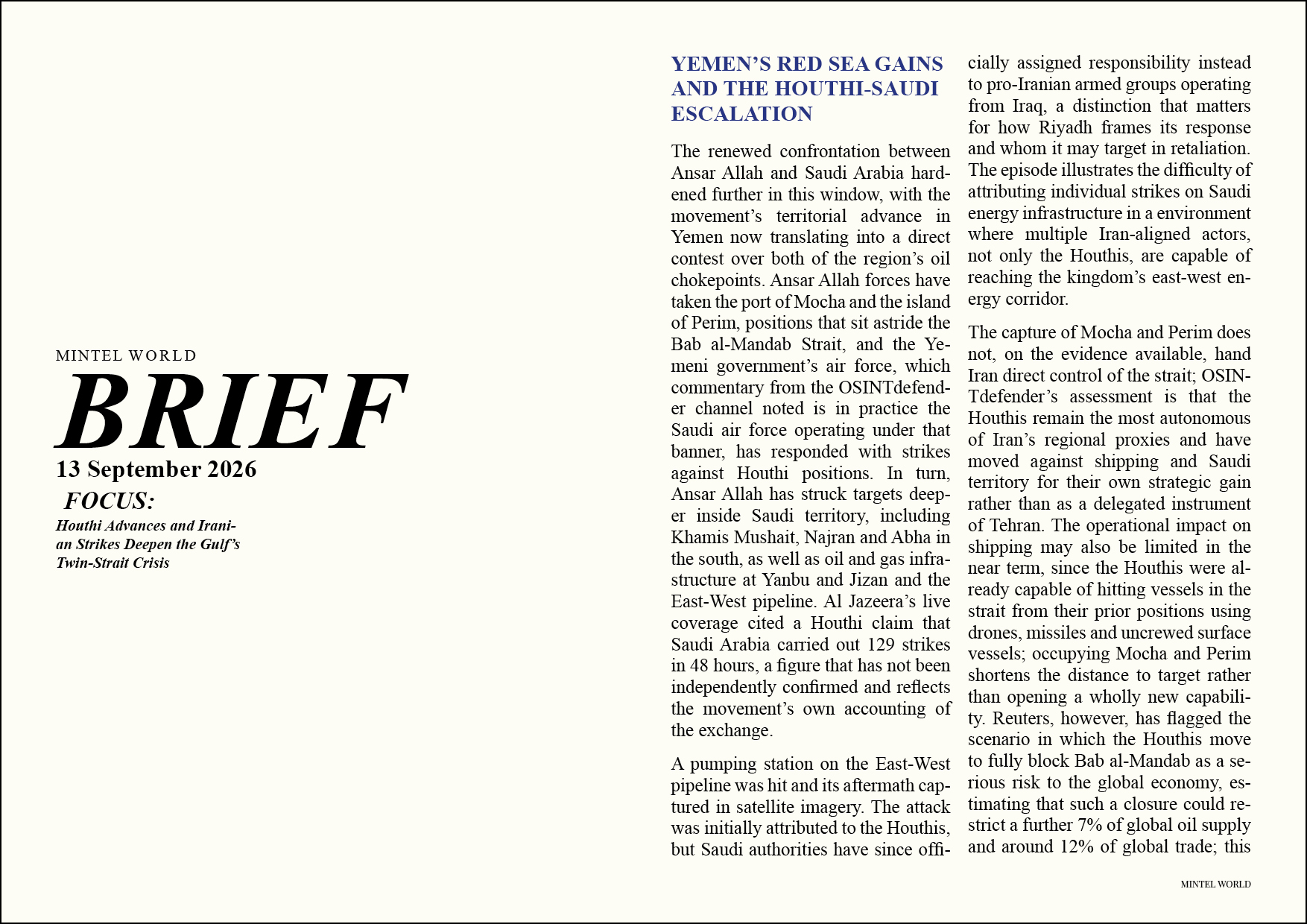
The Middle East entered a more fragmented and increasingly interconnected phase of the conflict this week, with Yemen, Iran, Saudi Arabia and the wider Gulf becoming tightly linked through parallel diplomatic, military and energy pressures. Saudi Arabia opened a reported channel to Ansar Allah through Oman while Washington separately held contacts with Houthi representatives in Muscat. Riyadh is also seeking de-escalation through China and other regional partners, reflecting growing pressure on the kingdom to manage the conflict without relying on direct US military intervention. At the same time, Ansar Allah consolidated its position along Yemen’s Red Sea coast and the Bab al-Mandeb, while Saudi territory came under a heavier wave of missile and drone attacks. Several of the diplomatic details remain unconfirmed and should be treated as provisional. The Iran war remains unresolved after more than six months, while the diplomatic and institutional framework around the nuclear issue has weakened. Russia and China blocked an extension of the UN Security Council’s Iran sanctions committee, while Washington and Tehran continue to offer sharply different accounts of the prospects for negotiations. Iran’s position is being reinforced by continued pressure on the Strait of Hormuz, while the United States and its allies face mounting costs, depleted interceptor stocks and longer weapons-delivery timelines. Israel, meanwhile, is entering an election campaign under significant military and fiscal pressure, with the government continuing to frame the war against Iran, Hezbollah and Hamas as unfinished while domestic political divisions over defense spending deepen. The conflict is increasingly translating into a broader energy and economic shock. Damage to Saudi Arabia’s East-West pipeline has disrupted the kingdom’s ability to move crude to the Red Sea, while Aramco has reportedly suspended contracted Saudi crude deliveries to European customers for October. Combined with sharply reduced traffic through the Strait of Hormuz and Ansar Allah’s control of the southern Red Sea corridor, Saudi Arabia faces simultaneous pressure on both major maritime export routes. The disruption is also feeding a wider diesel shortage, with Middle Eastern and Russian refining capacity under strain and European and US diesel prices reaching exceptional levels. Oil prices eased late in the week, but the underlying supply constraints remain significant. Across the region, the humanitarian and security burden continues to accumulate. Yemen has seen large-scale internal displacement since the renewed fighting, Gaza continues to record casualties despite a formally active ceasefire, and Lebanon is experiencing renewed friction along its southern frontier as Beirut prepares for a larger army deployment. In Iran, UN investigators have raised potential war-crimes findings over strikes that caused mass civilian casualties, while a reported Pentagon review identified intelligence and targeting failures in one of the most serious incidents. Taken together, the week's developments point to a conflict environment in which military pressure, diplomatic maneuvering, energy disruption and domestic political constraints are increasingly reinforcing one another rather than remaining separate regional crises.
Related Intelligence


Daily Brief
Get the daily intelligence summary delivered to your inbox every morning.