


Iran War Daily Brief - 31 March 2026
Executive Summary
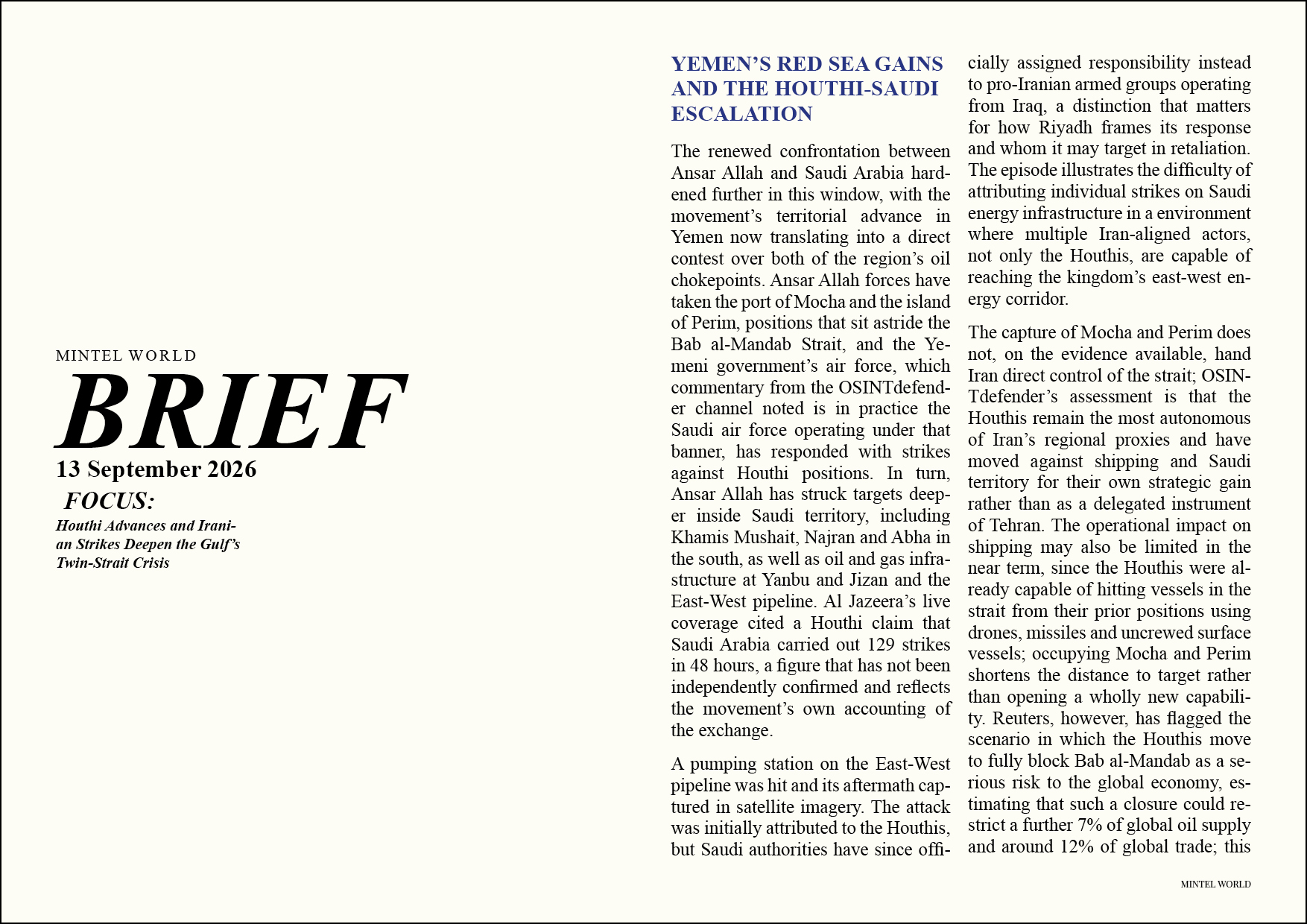
The conflict has consolidated into a controlled systemic confrontation, where escalation is no longer driven by battlefield imperatives but by the management of interdependent pressure systems spanning energy, logistics, finance, and diplomacy. The defining characteristic of this phase is not volatility, but structured persistence. Military operations are calibrated to degrade without collapsing, maritime routes are disrupted without being fully closed, and markets are destabilized without triggering systemic failure. This reflects a strategic equilibrium in which all actors operate within implicit thresholds designed to maximize leverage while preserving system continuity. The Strait of Hormuz has become the central regulatory mechanism of this system. It is no longer a passive chokepoint but an actively managed variable through which global economic pressure is modulated. The reduction of tanker flows—rather than their elimination—creates optimal pricing conditions while maintaining minimal system functionality. Political signaling has become operationalized within this framework. The U.S. president’s statement that allies should “go get your own oil” and “take it from Hormuz” reflects a structural shift in alliance dynamics, where energy security is no longer guaranteed but increasingly externalized. Simultaneously, European policymakers have begun explicitly rejecting U.S. assumptions of temporary disruption, warning instead of long-term structural damage due to infrastructure destruction and supply chain fragmentation. This divergence introduces a second-order instability: policy fragmentation layered on top of physical disruption.
Related Intelligence
Daily Brief
Get the daily intelligence summary delivered to your inbox every morning.