


Iran War Daily Brief - 27 March 2026
Executive Summary
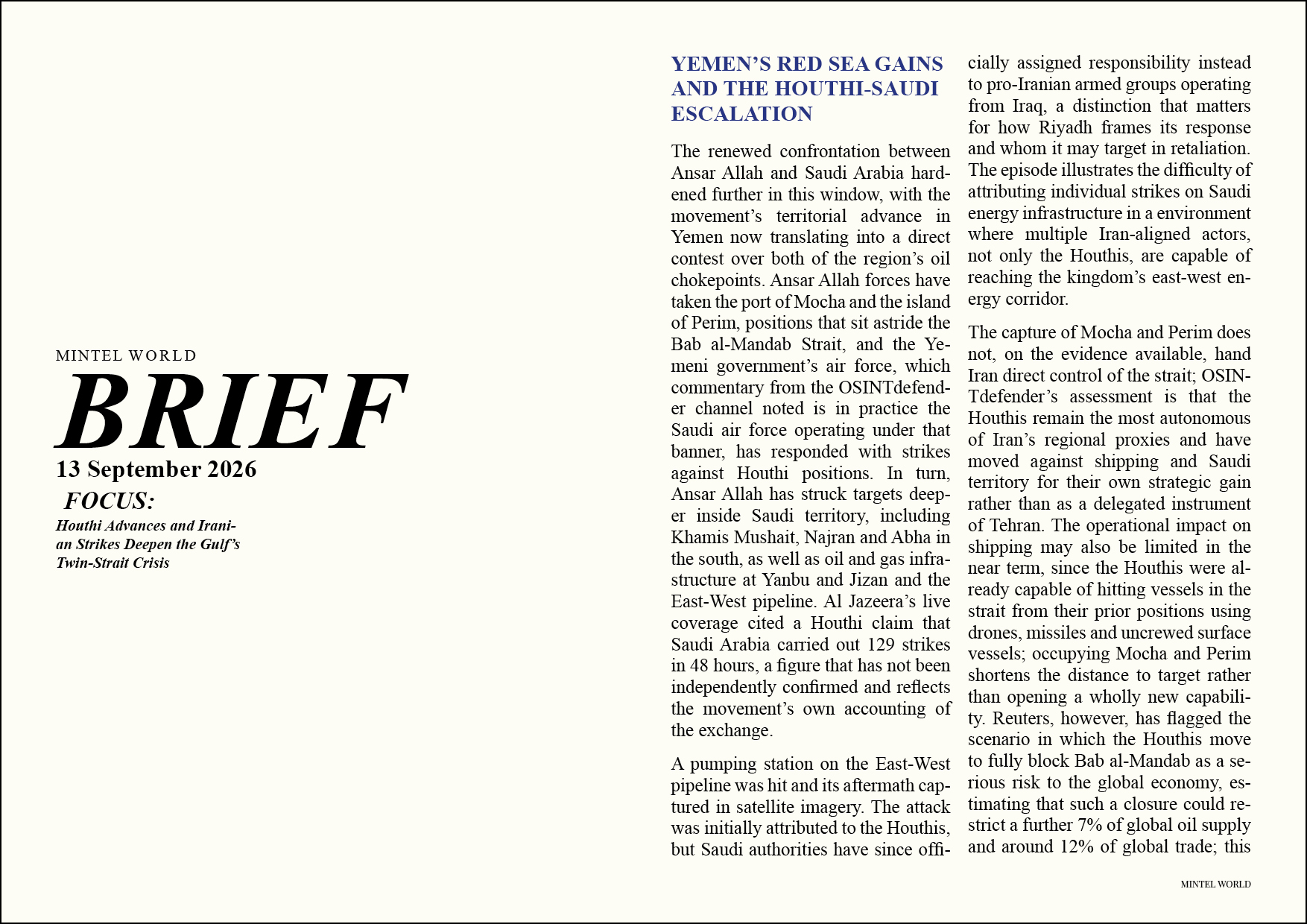
The conflict has entered a structurally escalated phase in which military operations, energy disruption, and global market volatility are no longer parallel dynamics but components of a single integrated crisis system. The operational environment reflects simultaneous escalation and constrained diplomatic signaling, with neither track dominating the trajectory. Washington continues to assert that Iran “wants to make a deal,” while Tehran maintains that “there are no negotiations,” describing ongoing exchanges only as indirect communication via intermediaries. This contradiction reflects a coercive diplomacy model in which military pressure and negotiation signaling are deployed concurrently rather than sequentially. The U.S. 15-point framework represents a maximalist restructuring proposal rather than a conventional ceasefire. Its provisions—elimination of enrichment, dismantling of Natanz, Fordow and Isfahan facilities, full IAEA access, termination of proxy networks, and restrictions on missile capabilities—collectively amount to a rollback of Iran’s deterrence architecture. Iranian officials have described the framework as “extremely maximalist and unreasonable,” reinforcing the low probability of near-term acceptance. At the same time, the conflict has already produced what multiple sources characterize as the “worst energy shock in history,” driven by disruption in Hormuz transit, production constraints, and maritime insecurity. The result is a systemic crisis affecting supply chains, inflation expectations, and global trade flows simultaneously.
Related Intelligence
Daily Brief
Get the daily intelligence summary delivered to your inbox every morning.