


Global Security and Defense Developments - 26 March 2026
Executive Summary
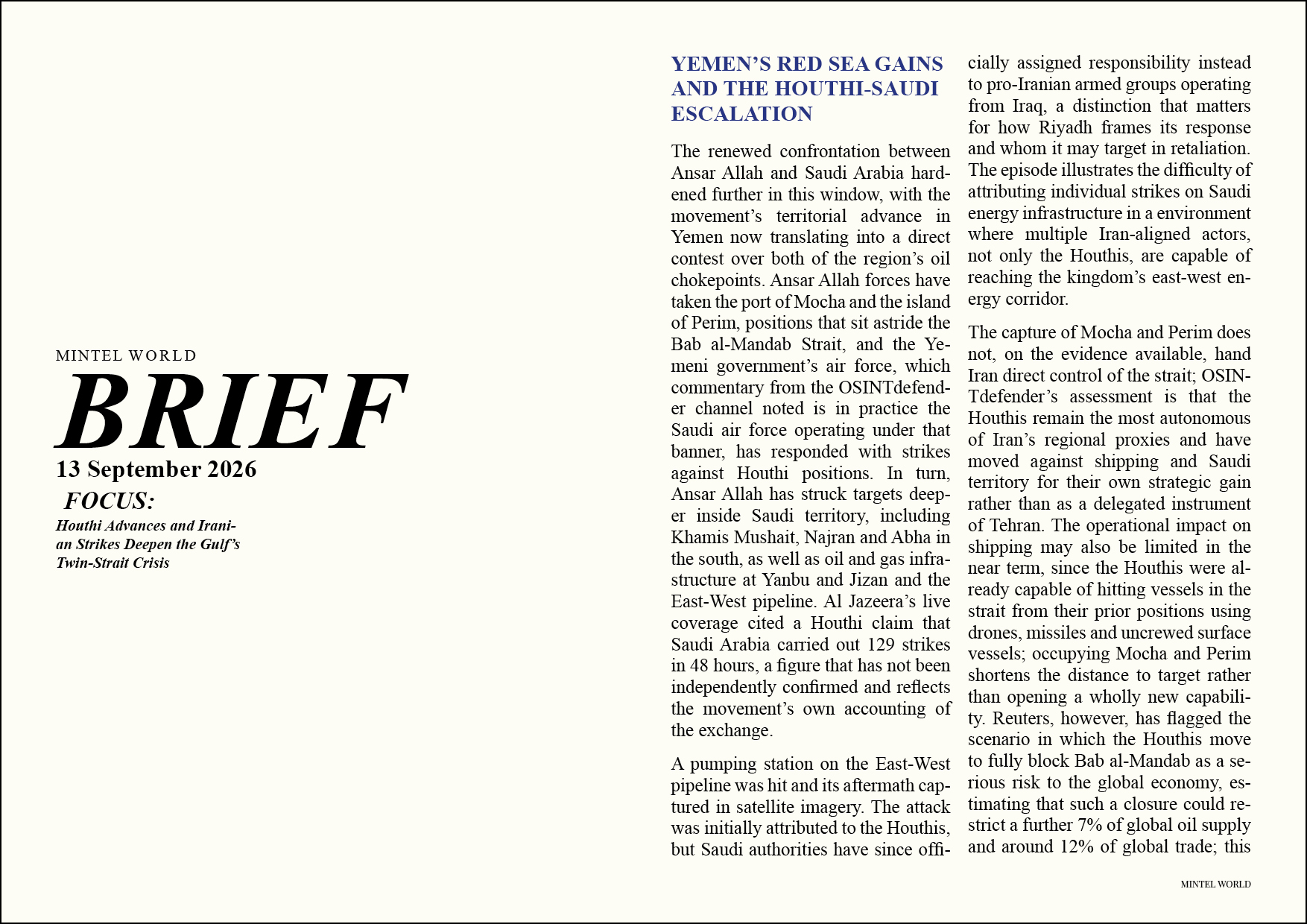
U.S. and Israeli operations continue to focus on degrading Iran’s missile sustainment architecture and operational logistics. Recent strike patterns indicate a shift toward targeting transfer nodes and supply corridors rather than fixed launch infrastructure, aiming to disrupt deployment cycles and reduce operational flexibility. Long-range bomber missions from both forward European bases and the continental United States, combined with intensified ISR activity, suggest preparation for sustained follow-on strike phases. Israeli operations have expanded deeper into southern Iran, reinforcing pressure on IRGC-linked logistics networks connected to coastal deployment areas. Iran has maintained a controlled escalation posture, avoiding large-scale ballistic missile launches while relying on limited precision strikes and distributed retaliation through proxy-linked and deniable systems. This approach reflects an effort to impose costs without triggering full-scale escalation. In the maritime domain, Iranian naval forces have increased close-range shadowing of commercial tankers, while hybrid tactics including GPS spoofing, AIS manipulation, and electronic interference continue to disrupt navigation and elevate operational risk. Incidents involving suspected unmanned explosive platforms and low-intensity blasts against commercial vessels highlight a persistent threat environment across the Gulf and Strait of Hormuz. U.S. force posture demonstrates continued escalation readiness, with amphibious groups, Marine Expeditionary Units, and strategic air assets positioned to support rapid operational expansion if required. The temporary pause on U.S. strikes targeting Iranian energy infrastructure reflects a calibrated attempt to create limited de-escalation space while preserving deterrence and strike capability. Iran has rejected the pause as insufficient and maintains a reciprocal stance regarding energy infrastructure targeting. Concurrent disruptions to LNG exports, reduced oil transit flows, and heightened maritime risk classifications indicate that the conflict is increasingly impacting global energy supply chains and commercial shipping stability.
Related Intelligence
Daily Brief
Get the daily intelligence summary delivered to your inbox every morning.