


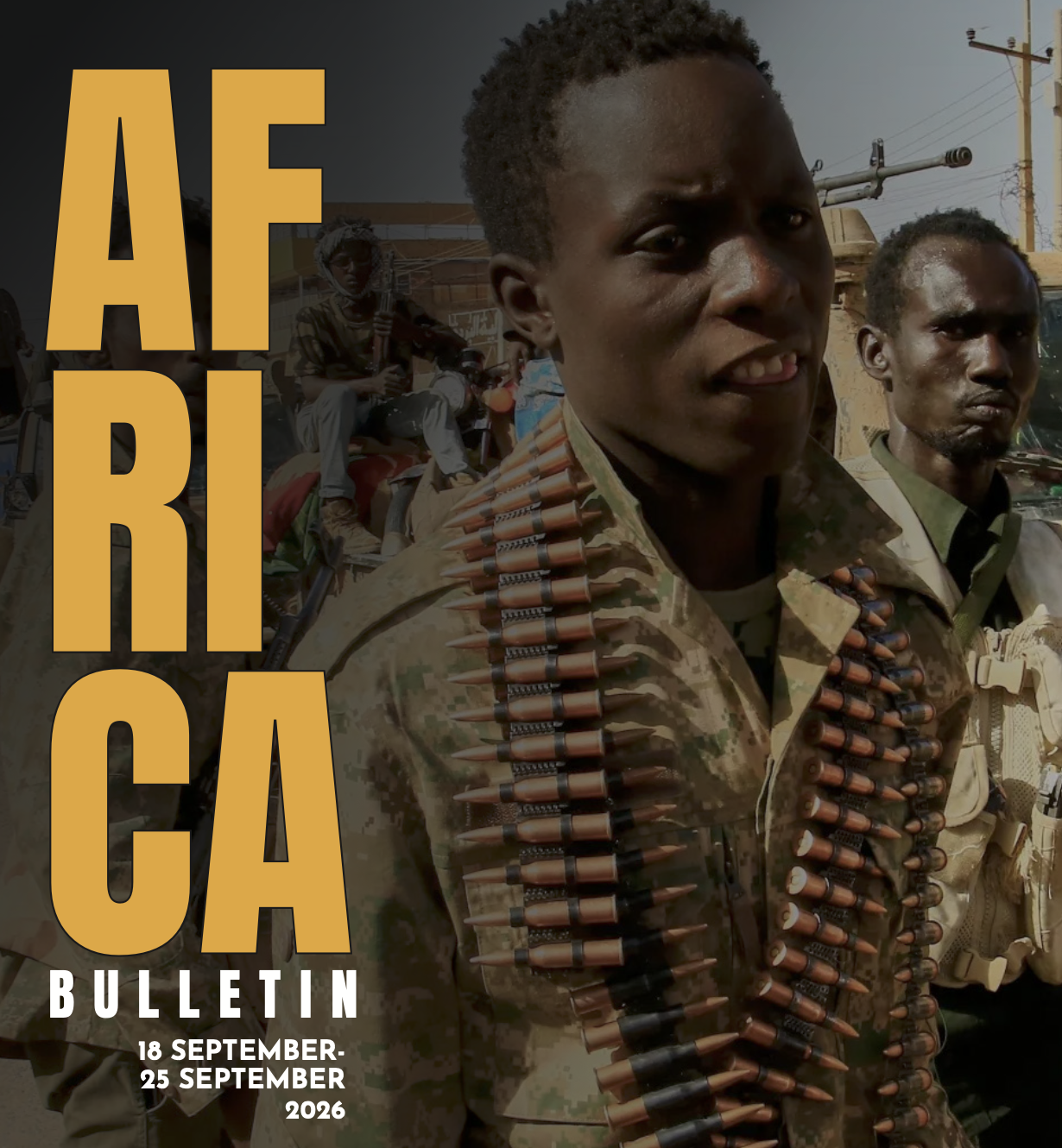
AFRICA BULLETIN — ISSUE 06
Executive Summary
Africa’s security environment remained highly volatile during 18–25 September, with intensified fighting in Sudan, Tigray, eastern DRC and the Sahel. Mali faced major JNIM attacks, while Niger experienced both renewed militant violence and internal military tensions. Somalia, meanwhile, faced growing uncertainty over international security financing as the AUSSOM withdrawal timeline became clearer. Diplomatically, security pressures did not prevent continued external engagement. Mali, Niger and Burkina Faso maintained selective dialogue with Western countries, while Algeria expanded its diplomatic and energy engagement in the Sahel. In Libya and Somalia, governments also sought to diversify international partnerships as security and institutional pressures continued. At the same time, energy and mining investment continued to advance despite persistent security risks. Angola attracted major new oil commitments, Mozambique accelerated LNG-related projects, Niger moved forward with uranium development, and the DRC, Zambia and Guinea expanded activity around copper, iron ore and other strategic minerals. Overall, the week reinforces a central pattern across Africa: weak security and institutional capacity are increasingly coexisting with expanding international capital flows. Western, Chinese, Gulf and emerging investors continue to position themselves around energy, critical minerals and strategic infrastructure, making resource competition an increasingly important component of Africa’s geopolitical landscape.
Related Intelligence
Daily Brief
Get the daily intelligence summary delivered to your inbox every morning.