


U.S.–Iran Tensions and the Prospect of a U.S. Military Operation Against Iran

Executive Summary
Tensions between the United States and Iran have entered a markedly escalatory phase since January 2026, driven by Iran’s advancing nuclear threshold posture, continued ballistic missile development, and regional military activities conducted through proxy forces. While diplomatic channels via Oman and Geneva have remained open, these engagements have produced limited results, reinforcing a dual-track approach in which diplomacy proceeds alongside rapidly intensifying military preparations. In parallel with inconclusive talks, the United States has initiated one of the most extensive force postures in the Middle East since the Second Gulf War. A sustained surge in air, naval, and support assets has significantly elevated U.S. operational readiness. The scale and tempo of deployments, particularly following the mid-February Geneva meetings, indicate preparation not only for deterrence signaling but also for the ability to conduct prolonged and complex military operations. The concentration of tanker, command-and-control, and networking aircraft underscores a focus on endurance, coordination, and multi-domain integration rather than a short-duration strike. Naval deployments further reinforce this posture, with multiple carrier strike groups, destroyers, and nuclear submarines positioned to provide layered strike, deterrence, and maritime security capabilities. Together with expanded air and missile defense architectures across regional bases, the United States has established a robust framework designed to counter potential Iranian ballistic missile, unmanned aerial vehicle, and asymmetric responses. The current disposition enables several plausible operational axes, ranging from conventional central corridors to alternative northern and southern approaches, each offering distinct military advantages and signaling options. This flexibility enhances U.S. strategic leverage while complicating Iranian defensive planning. At the same time, the persistence of diplomatic engagement suggests that military pressure is intended to shape negotiations rather than immediately supplant them. Overall, the depth, breadth, and sustainability of the U.S. buildup point to a deliberate strategy that keeps the military option firmly on the table. The simultaneous pursuit of diplomacy and large-scale force readiness reflects Washington’s assessment that only a credible and enduring military posture can meaningfully influence Iran’s strategic calculations in the current environment.
Tensions between the United States and Iran entered a new phase as of January 2026, shaped by the resurgence of domestic protests in Iran toward the end of 2025, Tehran’s continued progress in its ballistic missile program, and persistent disputes over the transparency of its nuclear activities. Assessing that Iran’s approach toward a nuclear threshold capability and its military activities conducted through regional proxy forces have undermined the deterrence balance, Washington initiated a broad process of military deployments and force positioning focused on the Middle East.
During this period of escalation, diplomatic channels were not severed. On the contrary, contacts between the United States and Iran continued through Oman and Geneva. Discussions in Oman were largely conducted within the framework of backchannel diplomacy and confidence building measures, while the Geneva talks directly addressed nuclear activities, ballistic missile capabilities, and regional military engagements. Public statements by both sides indicated that the discussions were constructive but inconclusive, with no tangible agreement reached, particularly on uranium enrichment activities and missile testing. This dynamic demonstrates that a balancing strategy has been adopted in which diplomacy and military preparations are pursued in parallel.
U.S. Military Deployments Toward the Middle East
Since January 2026, the United States has conducted at least 212 military flights oriented toward the Middle East via various bases in the region and across Europe. A significant portion of these flights has been linked to the transfer of air and missile defense systems intended to protect U.S. bases in the region against potential Iranian ballistic missile and unmanned aerial vehicle retaliation. Verified flights have concentrated primarily on the following five bases:
Muwaffaq Salti Air Base: 100+ flights
Prince Sultan Air Base: 23 flights
Ali Al Salem Air Base: 20 flights
Al Udeid Air Base: 13 flights
Isa Air Base: 4 flights
These figures reflect only flights confirmed through open sources, and the actual number is assessed to be higher. In addition, at least 10 military flights have been conducted to the strategically significant Diego Garcia base in the Indian Ocean.
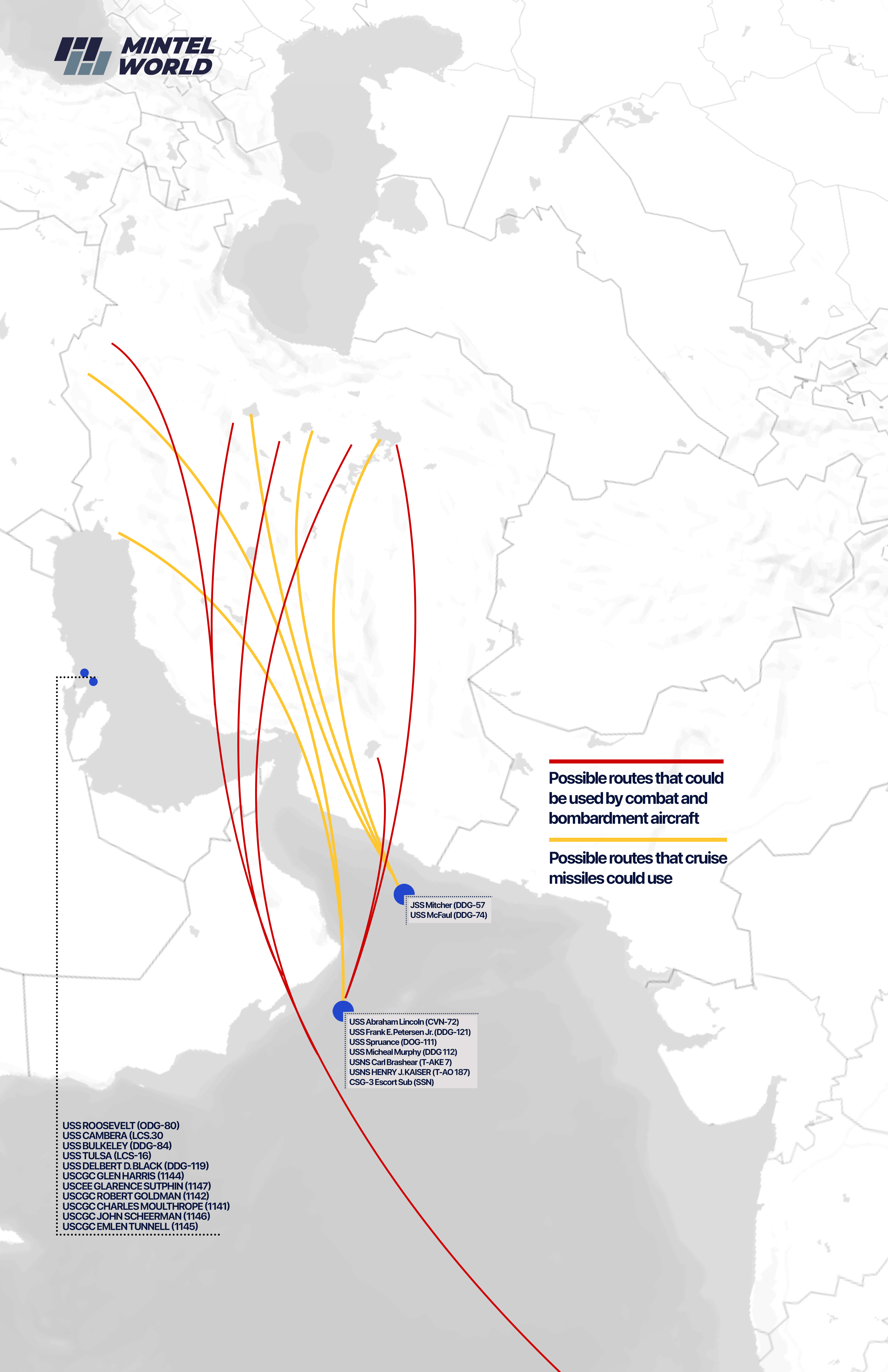
On the naval dimension, the USS Abraham Lincoln carrier strike group has been deployed to the Middle East, while the USS Gerald R. Ford carrier strike group has been reassigned from its mission in the Caribbean and is continuing its transit toward the region via the Mediterranean. Once both carrier groups arrive, it is projected that within the CENTCOM area of responsibility and its immediate vicinity there will be two aircraft carriers, approximately 15 destroyers, one SSGN, and at least four nuclear submarines in total, including three SSNs.
Following the Geneva talks held on 17 February, the tempo of U.S. military deployments increased markedly. Prior to the talks, 18 F-35A aircraft based in the United Kingdom were transferred to the Middle East. In the 48 hours following the meetings, 48 F-16s, 10 F-15Es, 6 F-22As, 6 E-3G AWACS, 4 E-11A BACN aircraft, and at least 45 KC-135R/T and KC-46A tanker aircraft were deployed to bases across the Middle East and Europe. The scale and pace of these movements indicate not only deterrence signaling but also a clear elevation in operational readiness.
Current U.S. Military Posture in the Region
The current U.S. buildup in the region points to a significant increase in aerial refueling capacity, which is critical for sustaining air operations. The distribution of tanker aircraft is assessed as follows:
Prince Sultan Air Base | 7 x KC-46A |
Al Udeid Air Base | 20 x KC-135R |
Souda Air Base | 11 x KC-135R/T, |
Diego Garcia NSF | 2 x KC-135T |
Sofia International Airport | 9 x KC-135R/T |
Moron Air Base | 1 x KC-46A |
Naval Air Station Rota | 15 x KC-135R/T |
Lajes Airport | 10 x KC-46A |
RAF Mildenhall | 8 x KC-135R/T |
Ramstein Air Base | 4 x KC-135R |
Glasgow Airport | 2 x KC-135R |
Geilenkirchen Air Base | 1 x KC-135R |
Excluding carrier-based air wings, the region currently hosts 30 F-35As, 6 F-22As, 6 E/A-18Gs, 36 F-15Es, 48 F-16C/Ds, and 12 A-10Cs. An additional deployment of six F-22As from the U.S. mainland to the region is also planned. THAAD and Patriot batteries deployed at U.S. bases are intended to establish a layered air and missile defense architecture against Iran’s ballistic missile capabilities.
On the allied side, the United Kingdom has deployed six F-35Bs and ten Eurofighter Typhoons at Akrotiri Air Base in Cyprus. Aircraft stationed across the region are configured for air superiority, deep strike, SEAD and DEAD missions, electronic warfare, close air support, and intelligence surveillance and reconnaissance operations.
Compared with the forces deployed during the 12-Day War and Operation Midnight Hammer, which included 12 F-22s, 12 F-35s, 12 F-15Es, four B-52Hs, and six B-2 bombers, the current buildup presents a broader picture both in terms of scale and sustainability. In particular, the density of tanker and command and control aircraft strengthens the assessment that preparations point toward a prolonged operation rather than a short duration strike.
Potential Operational Scenarios Based on Deployments
Northern Axis
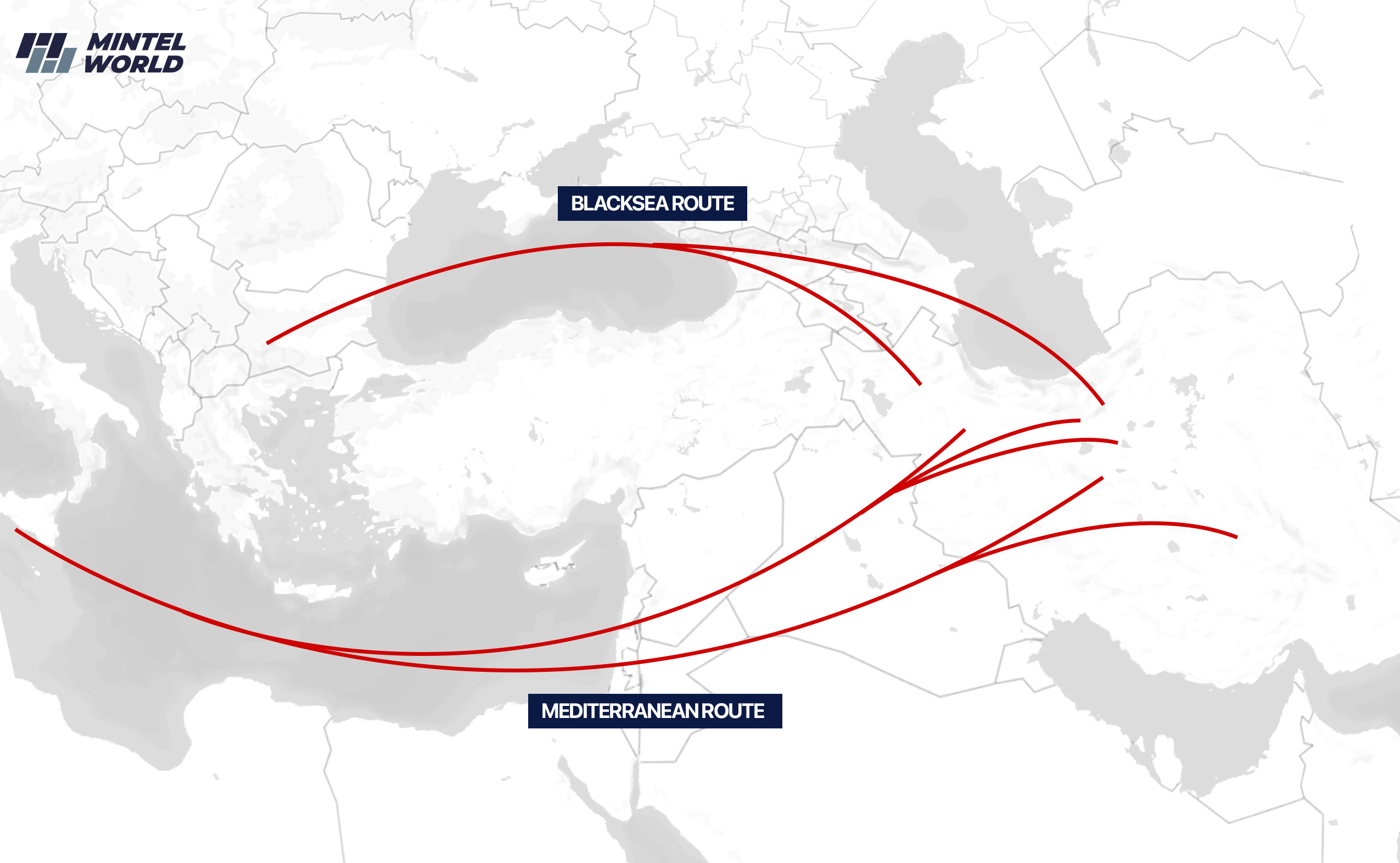
The northern axis emerges as a potential operational route extending into Iran from the north via the Black Sea and the Georgia Armenia Azerbaijan corridor. The deployment of at least nine KC-135R/T tanker aircraft to Bulgaria as part of the military buildup, together with recent visits by U.S. Vice President JD Vance to Armenia and Azerbaijan, suggests that airspace access may have been discussed in the context of a possible operation against Iran. Given that Iran’s military defensive posture is largely focused on its western and southern approaches, this route could represent a relatively less prepared front for Tehran. Bomber aircraft operating from the U.S. mainland or Europe and approaching Iran’s northern regions via the Caspian Sea could pose a significant challenge to Iran’s defensive depth.
Central Axis
The central axis corresponds to the conventional operational corridor used by Israel during the 12-Day War and by the United States during Operation Midnight Hammer. Iran is known to expect an attack along this route and has long reinforced its defenses accordingly. Nevertheless, it is assessed that the defensive infrastructure along this axis has been extensively mapped through long standing intelligence, surveillance, and reconnaissance efforts by the United States and its allies. Bombers and fighter aircraft operating from the U.S. mainland and European bases could advance along this route supported by intensive electronic warfare and SEAD and DEAD operations. The use of Lajes Airport and Souda Air Base to refuel B-2 bombers during Operation Midnight Hammer further indicates that the current deployment posture strongly points toward the reuse of this axis.
Southern Axis
The southern axis is assessed as an operational line relying on carrier air wings deployed in the Arabian Sea and the Gulf of Oman, as well as cruise missiles launched from destroyers and submarines. This axis is more likely to be employed not for a large scale penetration of Iranian airspace but for securing commercial maritime traffic, ensuring the continuity of global energy flows, and striking targets along Iran’s coastline. Should the United States deploy bomber or fighter aircraft to Diego Garcia, this route would also offer a viable option for long range strike operations.
Conclusion
In light of current assessments, the U.S. military buildup in the Middle East stands out as the largest deployment of combat aircraft and support assets to the region since the Second Gulf War. This buildup demonstrates that a significant portion of the United States’ most advanced technological systems has been forward deployed. In particular, the deployment of at least seven E-11A BACN and six E-3G AWACS aircraft suggests preparation not for a brief show of force but for a sustained and enduring campaign against Iran. Despite the continuation of diplomatic contacts, the elevation of military readiness to this extent indicates that Washington is treating the military option in the Iran file as a serious and credible course of action.
Relevant sources:
· Iran expected to submit written proposal resolving standoff with US, Reuters, date accessed February 17, 2026,
https://www.reuters.com/world/middle-east/iran-expected-submit-written-proposal-resolving-standoff-with-us-senior-us-2026-02-18/
· US deploys 50 fighter jets including F-22s, F-35s, F-16s to Middle East, Business Today, date accessed February 17, 2026,
https://www.businesstoday.in/world/us/story/us-deploys-50-fighter-jets-including-f-22s-f-35s-f-16s-to-middle-east-516627-2026-02-18
· Iran news and regional security developments, The Jerusalem Post, date accessed February 16, 2026,
https://www.jpost.com/middle-east/iran-news/article-886998
· Global defense and military developments, DefenseMirror, date accessed February 16, 2026,
https://defensemirror.com/news/
· Trump sends aircraft carrier amid Iran tensions, Associated Press, date accessed February 17, 2026,
https://apnews.com/article/trump-iran-aircraft-carrier-military-8db3fab10476949acda8b973be416204
· US deploys aircraft carrier Gerald R. Ford amid Iran tensions, The Washington Post, date accessed February 16, 2026,
https://www.washingtonpost.com/national-security/2026/02/13/trump-iran-aircraft-carrier-gerald-ford/
· Steffan Watkins, open-source naval and military tracking analysis, X (formerly Twitter), date accessed February 17, 2026,
https://x.com/steffanwatkins
· Defence Geek, defense and military aviation analysis, X (formerly Twitter), date accessed February 16, 2026,
https://x.com/DefenceGeek
· Ian Ellis-Jones, defense and strategic affairs commentary, X (formerly Twitter), date accessed February 16, 2026,
https://x.com/ianellisjones
· Armchair Admiral, naval operations and OSINT commentary, X (formerly Twitter), date accessed February 17, 2026,
https://x.com/ArmchairAdml
Related Intelligence

Daily Brief
Get the daily intelligence summary delivered to your inbox every morning.