


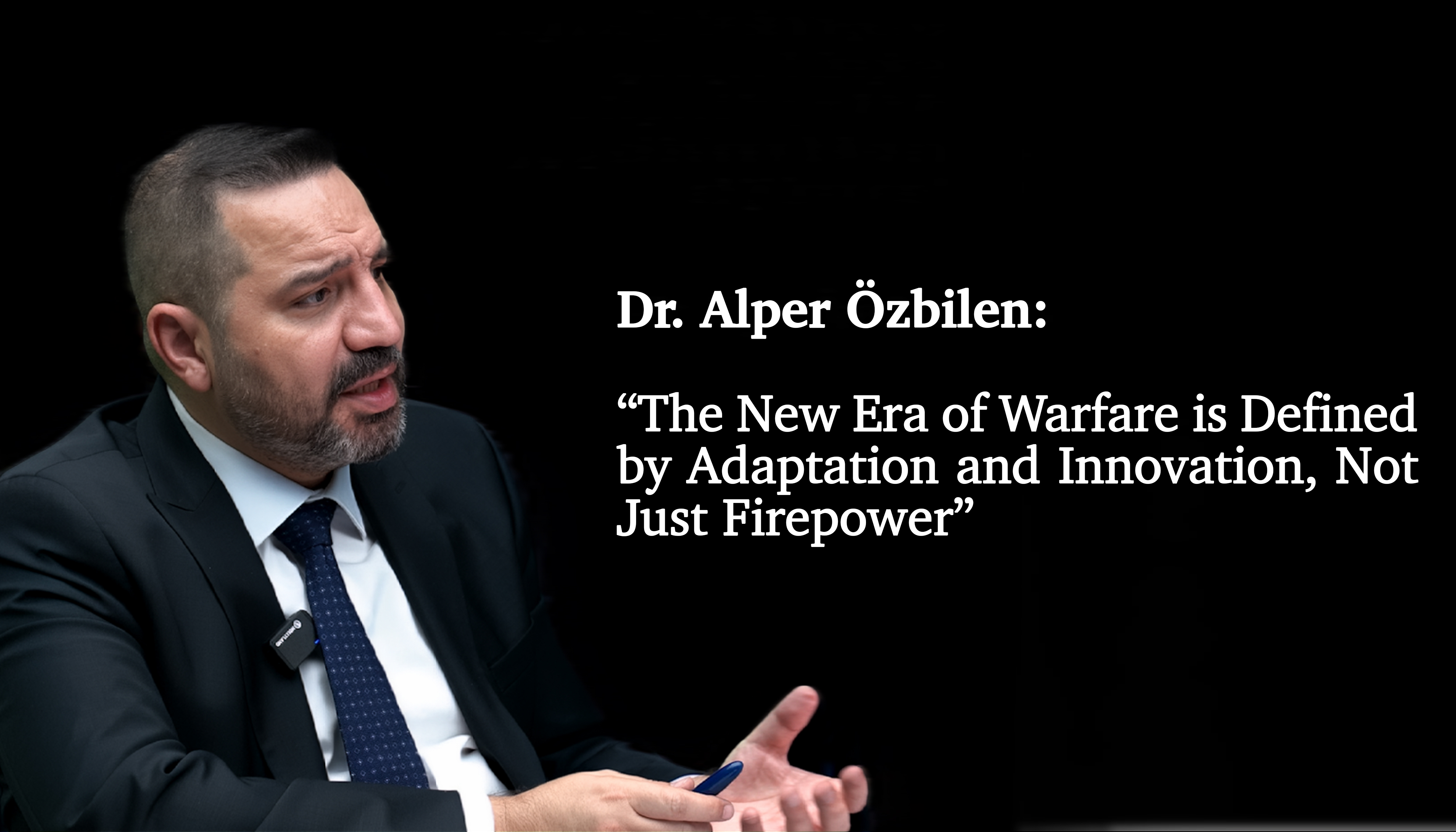
Dr. Alper Özbilen: The New Era of Warfare is Defined by Adaptation and Innovation, Not Just Firepower

Executive Summary
In his interview with the Ukrainian National News Agency (Ukrinform), Dr. Alper Özbilen argues that the war in Ukraine has become a defining example of how modern warfare is evolving beyond traditional measures of military power. According to Özbilen, battlefield success is increasingly determined not by the size of armies or the quantity of weapons, but by the ability to rapidly adapt, innovate, and integrate emerging technologies. He highlights Ukraine’s capacity to transform battlefield experience into new tactics, software updates, and operational concepts, creating a dynamic innovation ecosystem that combines artificial intelligence, unmanned systems, electronic warfare, digital command networks, and real-time intelligence. In his view, the conflict demonstrates that decision-making speed and organizational adaptability can offset significant disadvantages in manpower and resources. Özbilen further argues that the future of warfare will be shaped by the integration of AI, autonomous systems, space technologies, cybersecurity, and advanced communications into a single operational ecosystem. He emphasizes that strategic advantage will belong to states capable of collecting, processing, and acting upon information faster than their adversaries. The interview also highlights the growing role of private technology companies and defense innovation clusters in military modernization, as well as the increasing importance of satellite communications, digital infrastructure, and cyber resilience. For Özbilen, the central lesson of the Ukraine war is clear: adaptation and innovation have become strategic resources in their own right, and future military success will depend as much on learning and technological integration as on conventional firepower.
As Russia’s full-scale invasion of Ukraine enters its fifth year, the conflict has become one of the most closely studied wars of the 21st century. Beyond its geopolitical consequences, the war has emerged as a testing ground for new military concepts, technologies, and operational doctrines. In an extensive interview with the Ukrainian National News Agency (Ukrinform), technology strategist and entrepreneur Dr. Alper Özbilen answered questions from journalist Olha Budnyk on the lessons of the war in Ukraine, emerging defense technologies, and the future of security. Throughout the interview, Özbilen argued that the conflict is reshaping the foundations of modern warfare, demonstrating that adaptability and innovation can be as decisive as traditional military power.
At the center of Özbilen’s analysis is the belief that military superiority can no longer be measured primarily through the number of soldiers, tanks, or aircraft. Instead, the decisive advantage increasingly belongs to those capable of integrating artificial intelligence, unmanned systems, electronic warfare, and real-time information into a coherent operational framework.
Adaptation as the New Measure of Military Power
According to Özbilen, the most significant lesson of the Ukraine war is that modern warfare is defined by the speed of adaptation. He argues that armed forces are operating in an environment of continuous learning, where success depends on how quickly battlefield experience can be translated into new technologies, tactics, and organizational changes.
As he noted, “The course of modern warfare is no longer determined by the size of armies but by the speed at which they adapt to change.”
This perspective challenges many traditional assumptions about military power. While conventional capabilities remain important, Özbilen contends that the ability to rapidly incorporate emerging technologies into combat operations has become equally critical. In his view, Ukraine has demonstrated how a military facing a larger adversary can compensate for resource disadvantages through innovation, flexibility, and rapid adaptation.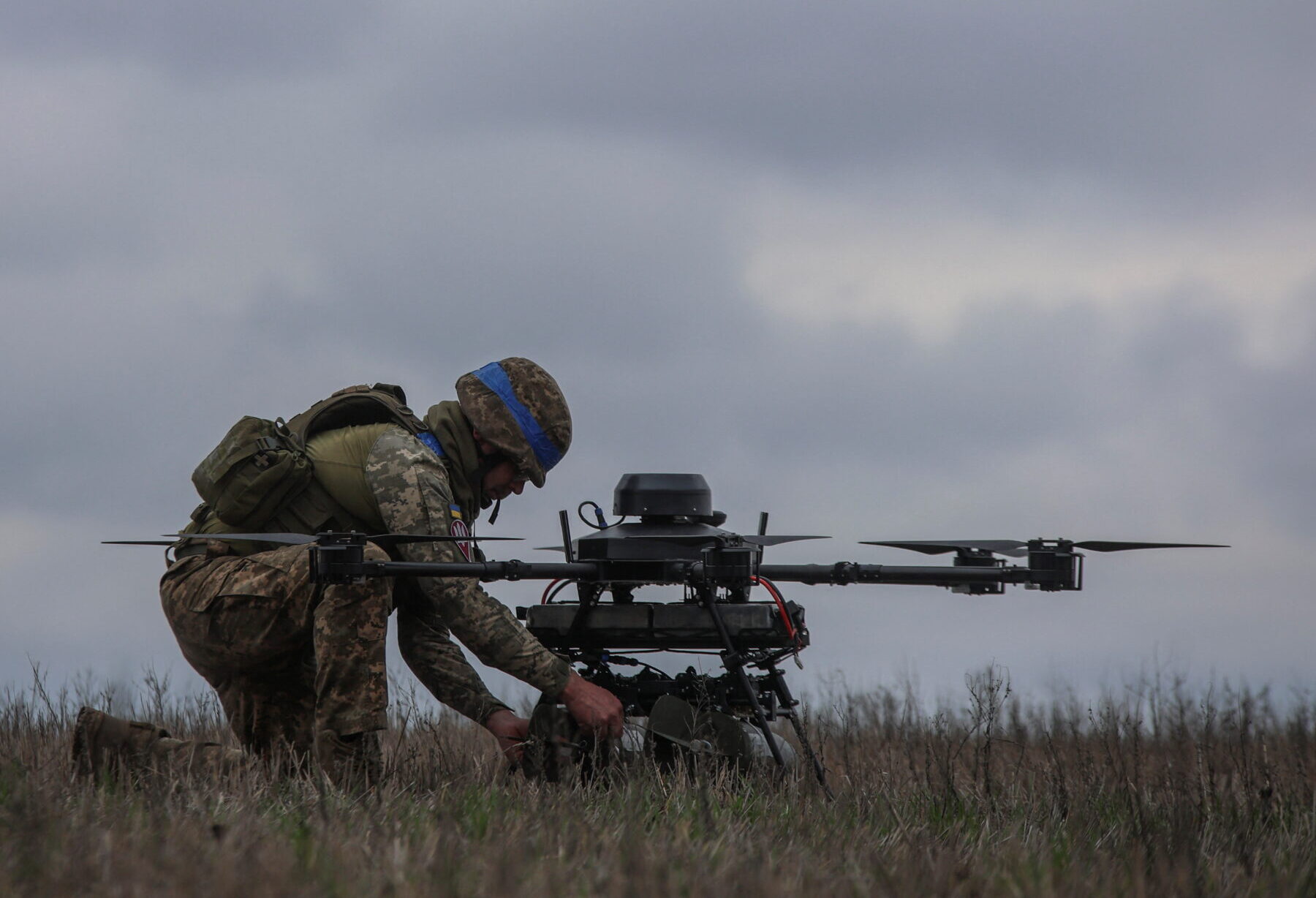
Artificial Intelligence and the Battle for Decision Superiority
Artificial intelligence occupies a central place in Özbilen’s vision of future warfare. However, he rejects the notion that AI alone constitutes a strategic advantage. Instead, he argues that its value depends on how effectively it is integrated into broader decision-making processes.
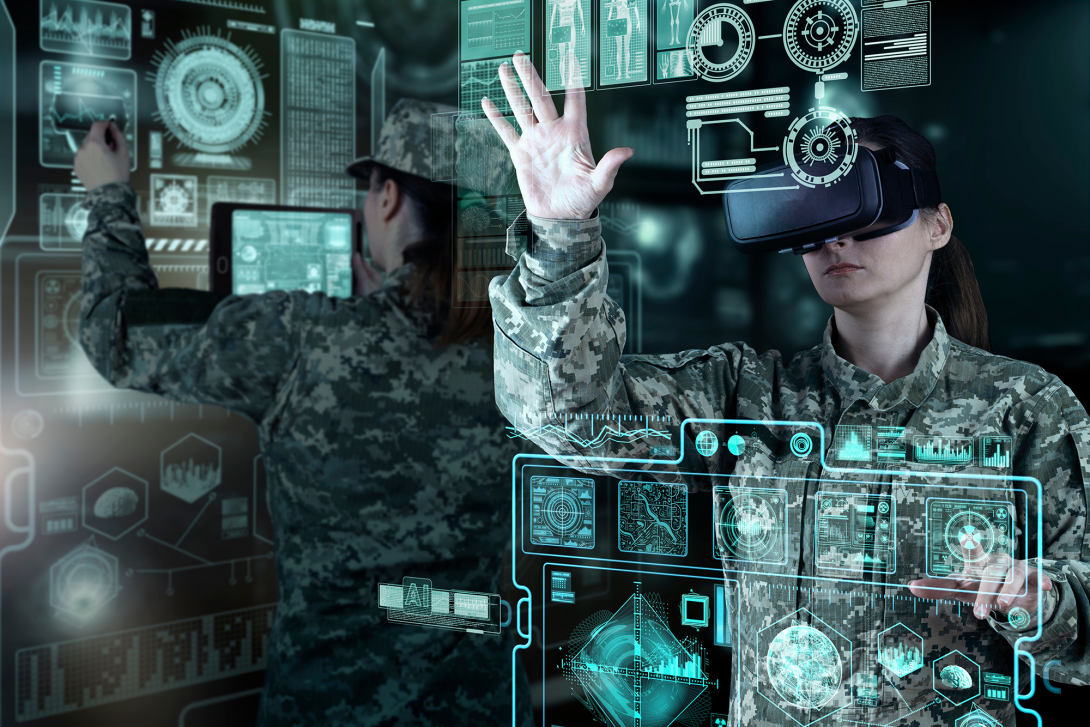
Throughout the conflict, Ukrainian forces have increasingly relied on the rapid processing of battlefield intelligence, satellite imagery, open-source intelligence, sensor data, and electronic intelligence. AI-powered analytical tools have helped transform this information into actionable decisions within compressed timeframes. According to Özbilen, future strategic competition will revolve around decision superiority rather than platform superiority.
In his words, “Strategic advantage will belong to the nation that can collect information more rapidly, protect its data more effectively, analyze it more accurately, and translate those insights into timely operational decisions.”
This shift places AI at the heart of military command-and-control systems. Rather than replacing human decision-makers, artificial intelligence increasingly serves as a force multiplier, accelerating the decision cycle and enabling commanders to respond more effectively to changing battlefield conditions.
Ukraine’s Innovation Ecosystem
One of Özbilen’s most important observations concerns Ukraine’s ability to build what he describes as a military innovation ecosystem. While much international attention has focused on FPV drones, he argues that Ukraine’s real achievement lies in creating an integrated environment where technology, battlefield experience, and operational feedback continuously reinforce one another.
Low-cost drones have undoubtedly transformed warfare. Platforms costing only a few thousand dollars have repeatedly demonstrated the ability to destroy equipment worth millions. Yet Ukraine’s success extends far beyond individual drone systems. Electronic warfare capabilities, interceptor drones, unmanned surface vessels, digital command networks, and AI-supported target acquisition systems are all interconnected elements of a broader ecosystem.
What makes this model particularly effective is its capacity to learn and evolve at extraordinary speed. Frontline feedback is rapidly translated into software updates, revised tactical concepts, and improved technological solutions. As Özbilen observed, “The speed of software updates has become almost as important as the rate of ammunition production.”
This statement reflects a profound transformation in warfare. In previous eras, industrial output and manufacturing capacity largely determined military effectiveness. Today, software development cycles, algorithm improvements, and digital adaptation are becoming equally important components of combat power.
From Resource Superiority to Decision-Making Advantage
Another major theme in Özbilen’s analysis is the growing importance of decision-making quality over resource superiority. While traditional military theory often emphasizes numerical advantages, he argues that modern conflict increasingly rewards organizations capable of making faster and more informed decisions.
Ukraine’s experience demonstrates how information can function as a strategic resource. By integrating intelligence from multiple sources and rapidly distributing it across operational networks, Ukrainian forces have frequently compensated for limitations in manpower and equipment. This dynamic has also transformed defense innovation itself.
Traditionally, military technologies are developed through lengthy procurement cycles that often take years before reaching operational units. Ukraine has effectively reversed this process by turning the battlefield into a real-world research and development environment. Engineers, military personnel, startups, and technology companies interact continuously, allowing new solutions to be tested, modified, and deployed in a matter of weeks rather than years.
As Özbilen explained, “New solutions have been developed not over years, but within weeks – and in some cases, within days.”
Lessons for NATO and Future Armed Forces
The implications extend well beyond Ukraine itself. Özbilen describes the war as NATO’s most important military learning experience of the past three decades. For the first time, a high-intensity conflict has brought together conventional weapons, artificial intelligence, commercial space technologies, electronic warfare systems, unmanned platforms, and open-source intelligence at such scale.
As a result, NATO members are reassessing military training programs, ammunition stockpiles, electronic warfare capabilities, air defense architectures, and doctrines governing unmanned systems. Yet Özbilen argues that the most valuable lesson is not technological but organizational.
The armed forces most likely to succeed in future conflicts will not necessarily be those possessing the most advanced platforms, but those capable of updating doctrines, technologies, and training systems at the fastest pace. His assessment suggests that adaptability itself is becoming a strategic capability.
The Rise of Networked and Autonomous Warfare
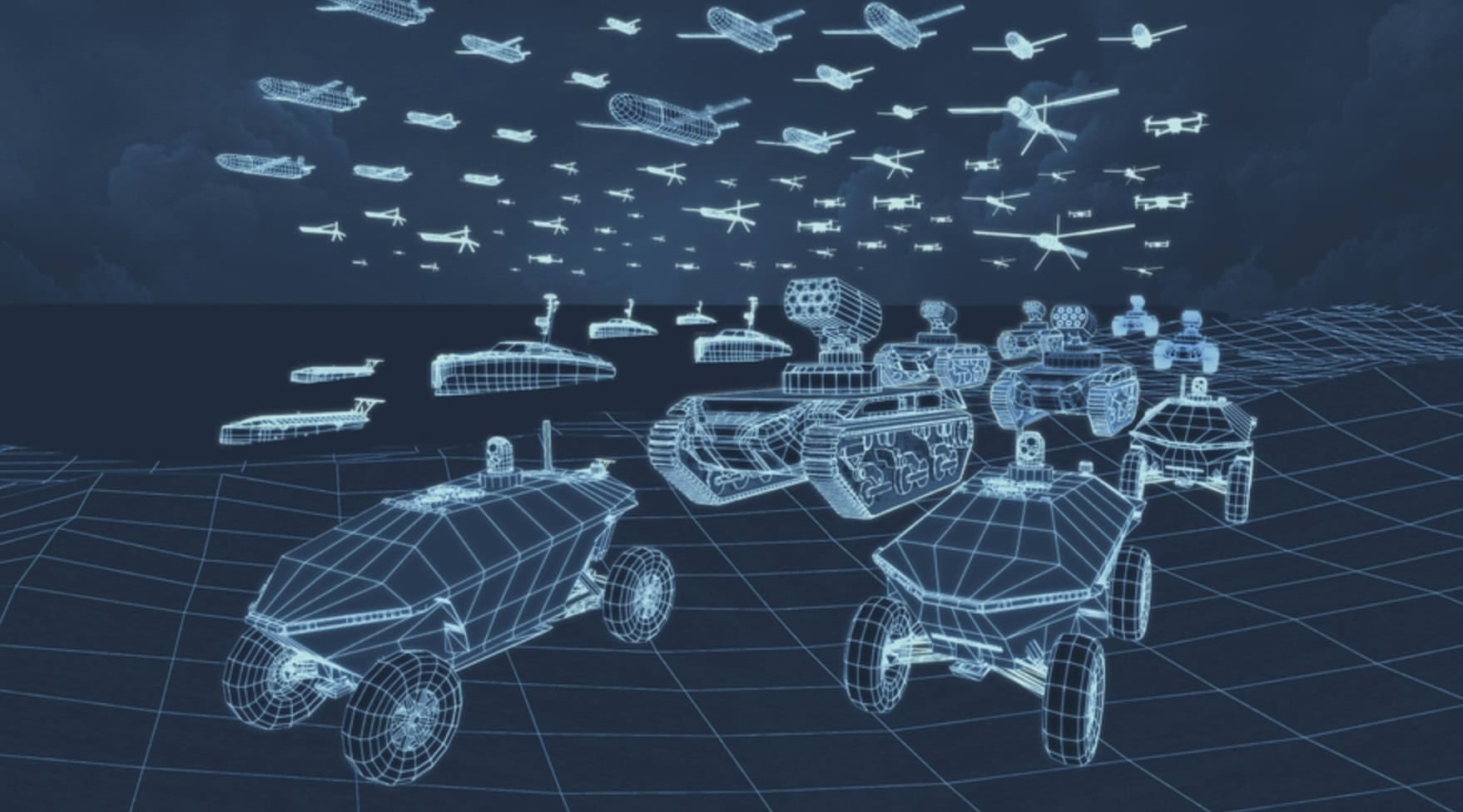
Looking ahead, Özbilen believes that the next stage of military transformation will not be defined by the number of drones deployed, but by the extent to which different systems can operate together as an integrated network.
He envisions a battlefield where aerial, ground, and maritime unmanned platforms function alongside AI-enabled decision-support systems, electronic warfare assets, and precision-guided weapons within a single operational architecture.
“The decisive factor is no longer the number of drones, but their ability to operate as an integrated system,” he stated.
Future developments are likely to include greater autonomy, improved target recognition, enhanced resilience against electronic warfare, drone swarming capabilities, and real-time coordination among multiple platforms. Özbilen also highlights an often-overlooked factor: energy. Battery technology, power management, and energy efficiency may become as strategically important as the platforms themselves, shaping the effectiveness and sustainability of future unmanned operations.
Private Industry and the Future of Defense Innovation
Özbilen also identifies a major structural shift within the defense sector. Innovation is increasingly moving from traditional defense contractors toward private technology companies, startups, and commercial research ecosystems.
Many of today’s most important defense-related technologies—including artificial intelligence, software, cybersecurity, autonomous systems, and space technologies—are being developed primarily in the private sector. Ukraine’s Brave1 initiative serves as a prominent example of this transformation. By connecting government institutions, military units, universities, engineers, and startups, the initiative has created a dynamic innovation ecosystem capable of responding rapidly to frontline requirements.
Nevertheless, Özbilen does not believe the state’s role is diminishing. Rather, governments must focus on defining strategic priorities, protecting critical technologies, establishing regulatory frameworks, and creating conditions that encourage long-term investment. In his view, future defense leaders will be those capable of building effective partnerships among governments, armed forces, and private industry.
Space, Data, and the New Security Architecture
Another key lesson from the war concerns the growing importance of space and digital infrastructure. Satellite communications, commercial imagery providers, and services such as Starlink have demonstrated that space is no longer merely a supporting domain but a core component of military operations.
“Space is no longer a supporting domain – it has become an integral part of modern warfare,” Özbilen noted.
The widespread use of commercial satellite imagery and open-source intelligence has fundamentally changed how wars are observed, documented, and understood. At the same time, the expansion of digital networks has increased the importance of cybersecurity, information integrity, and resilience against disinformation campaigns.
As a result, future security architectures will need to protect not only physical territory but also data, communications infrastructure, and digital trust. Space security, cybersecurity, and information security are increasingly becoming interconnected components of a single strategic environment.
Taken together, Özbilen’s analysis presents the Ukraine war as a defining transition point between the industrial model of warfare and an innovation-driven model shaped by artificial intelligence, software, autonomous systems, and continuous adaptation. The conflict suggests that future military success will depend less on the accumulation of firepower and more on the ability to learn, innovate, and evolve faster than an adversary.
Perhaps this will become the lesson most frequently taught in military academies: “The strength of an army is determined not only by the number of platforms it possesses, but by how quickly it learns, adapts to change, and translates those lessons into action on the battlefield,” Dr. Özbilen said.
Related Intelligence

Daily Brief
Get the daily intelligence summary delivered to your inbox every morning.